Anamosa, Iowa — serving North Dakota
Custom metal fabrication and welding for North Dakota
North Dakota runs two demanding industries on the same fabricated steel: large-scale grain farming and oilfield service work. Both operate at temperatures that expose a marginal weld, and both are far enough from most fabricators that shipping has to be planned rather than assumed.
- Upload a DWG, DXF, STEP, or PDF and we quote straight from it
- AWS D1.1 certified welding, robotic and manual
- Cutting, forming, welding, leak testing, and finishing under one roof
- Over 80,000 hydraulic reservoirs delivered since 2002
Get a fast quote
Tell us roughly what you need and attach your drawing if you have one. We come back with questions and a price — no full spec required to start.
- 2002
- Fabricating in Iowa since
- 80,000+
- Hydraulic reservoirs delivered
- AWS D1.1
- Certified MIG welding
- One part
- Minimum order
Industries we serve
Who we build for in North Dakota
Distance is the defining constraint on North Dakota work, and we treat it as an engineering problem rather than a shipping afterthought. Print revisions, weld callouts, and first-article approval are settled before anything is cut, because sending a part back across four states to fix a detail is not a realistic remedy.
Oilfield service equipment
Skids, frames, guards, and hydraulic reservoirs for service rigs, pump units, and workover equipment.
Large-acre agricultural equipment
Weldments for air seeders, high-clearance sprayers, grain carts, and heavy tillage.
Snow and municipal equipment
Plow frames, spreader components, and hydraulic assemblies for winter service fleets.
Trenching and utility equipment
Fabricated assemblies for boring, trenching, and utility body applications.
Capabilities
Fabrication and welding for cold-weather service
Equipment that starts at twenty below asks more of a weld and a hydraulic system than the same machine does in July. We will raise those details during quoting rather than after the first winter.
 Custom metal fabricationBuilt from your drawings, CAD files, or a physical sample.
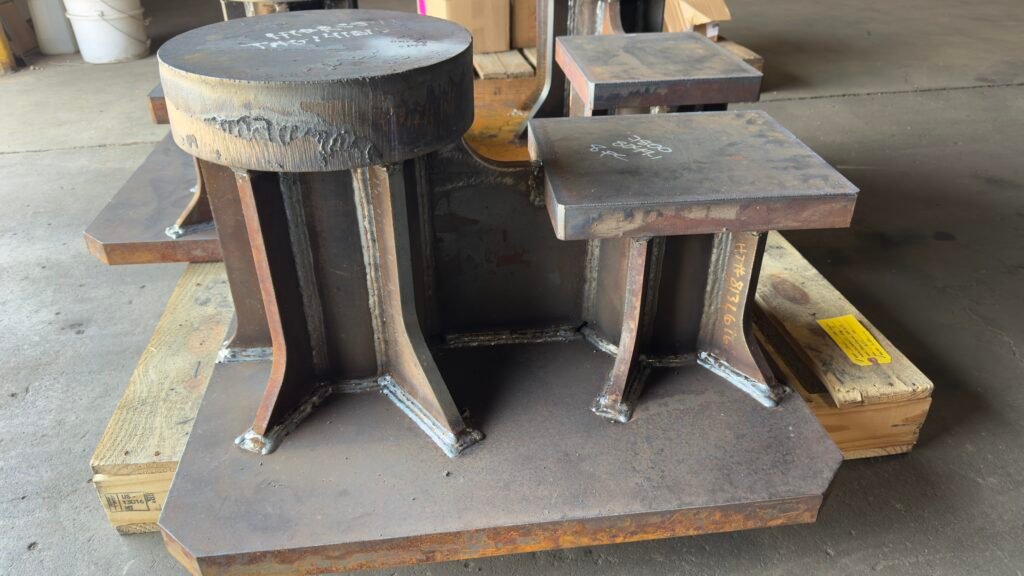
- Production weldmentsRepeatable robotic MIG welding for ongoing OEM runs.
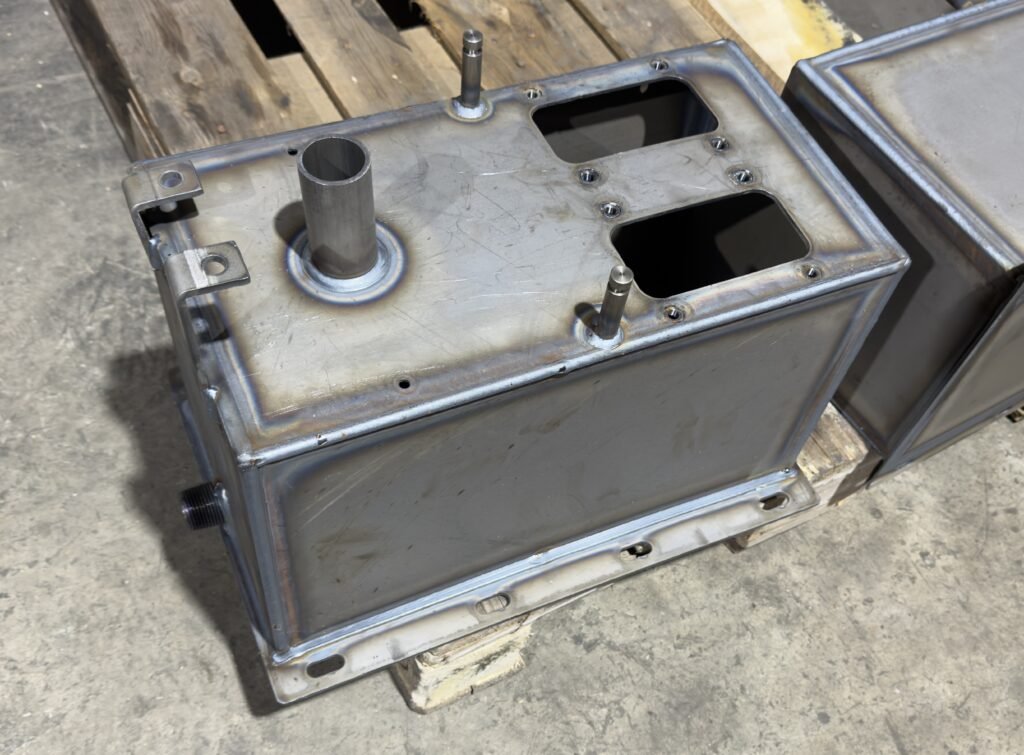
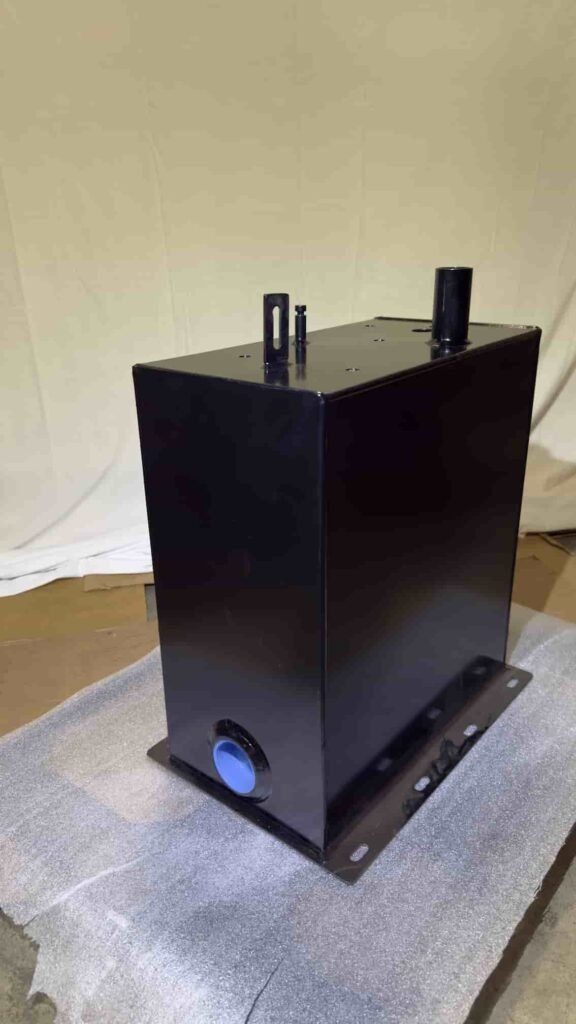
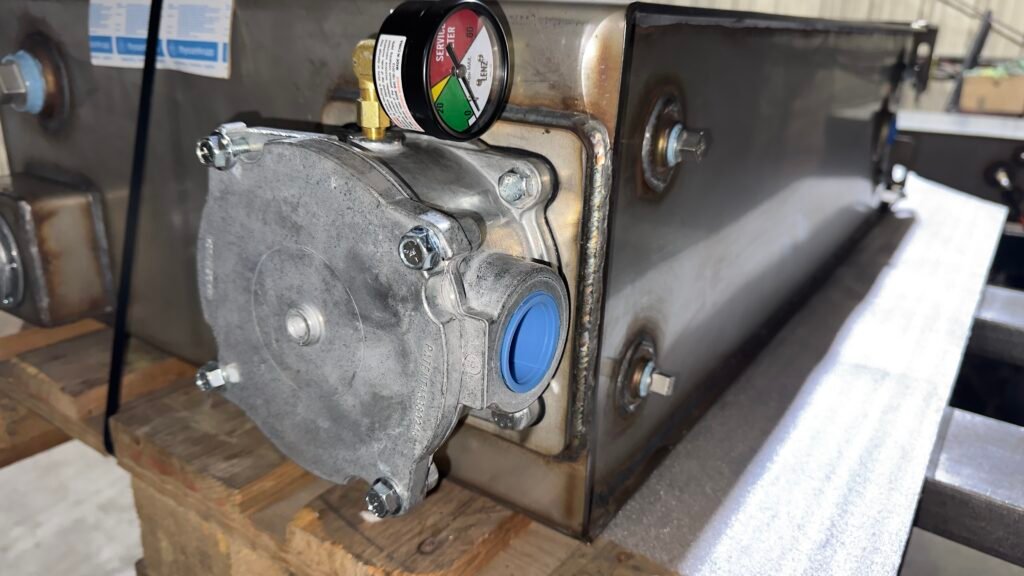
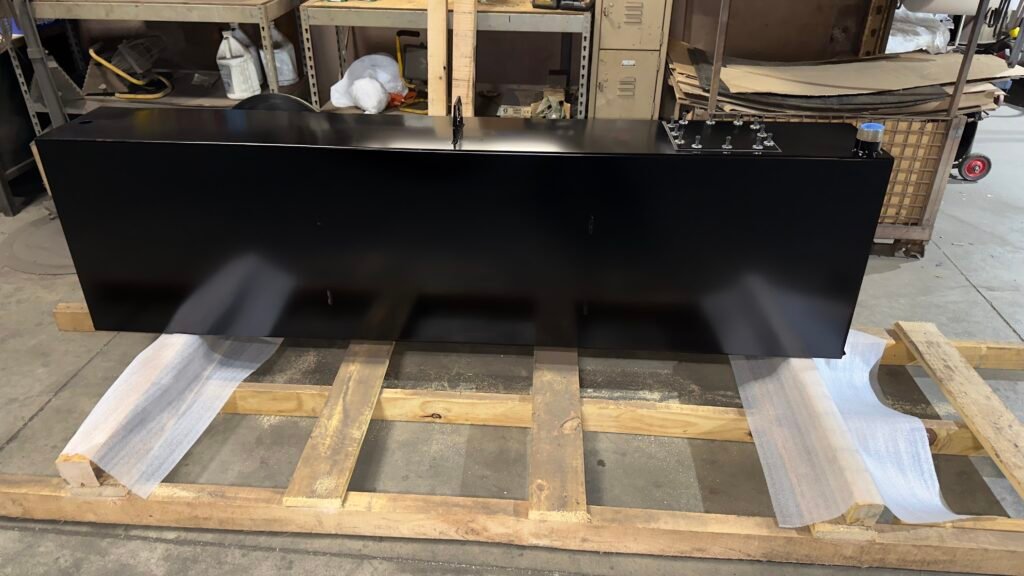
- Hydraulic reservoir tanksSteel and stainless tanks with custom ports, baffles, and mounting.
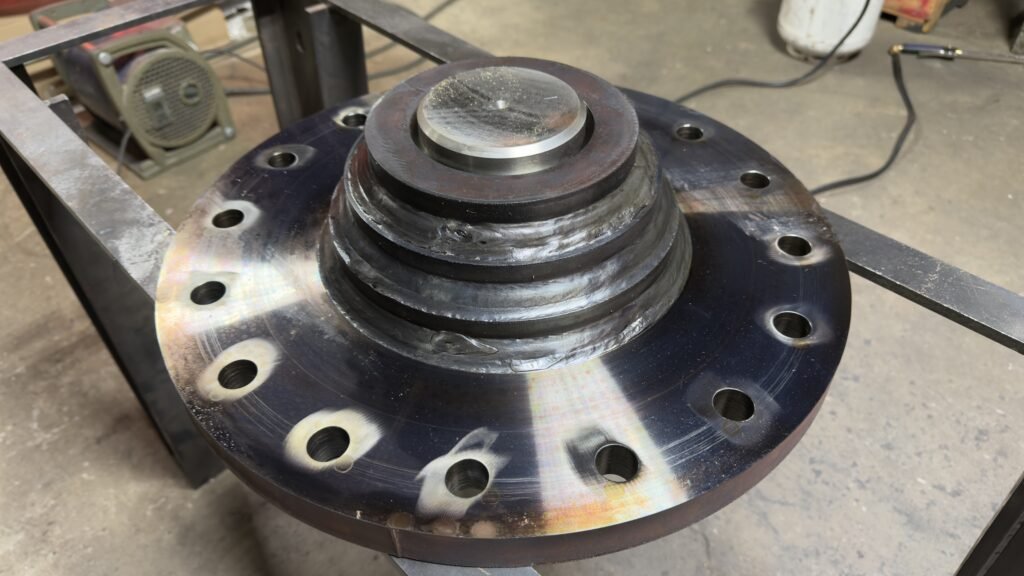
- Welded assembliesFrames, brackets, guards, platforms, and multi-part assemblies.
- Prototype and short runOne-off parts and first articles before you commit to production.
- Repair and modificationRework and reinforcement on existing equipment and components.
Why North Dakota operators use us
Built to ship, crated to arrive intact
Freight distance from Iowa is real, so we build with the trip in mind. Parts are skidded or crated properly, multi-unit orders are consolidated onto a single skid where the geometry allows, and we confirm handling requirements before the run rather than at the dock. A part damaged in transit costs the same as a part built wrong.
The work you cannot see in a photo is the rework we did not have to do.
Recent work
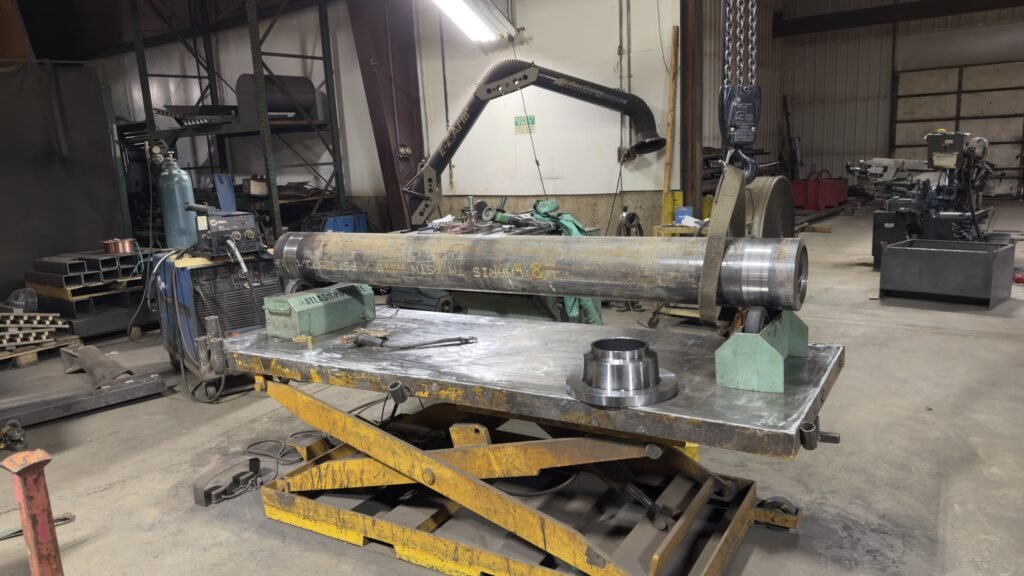
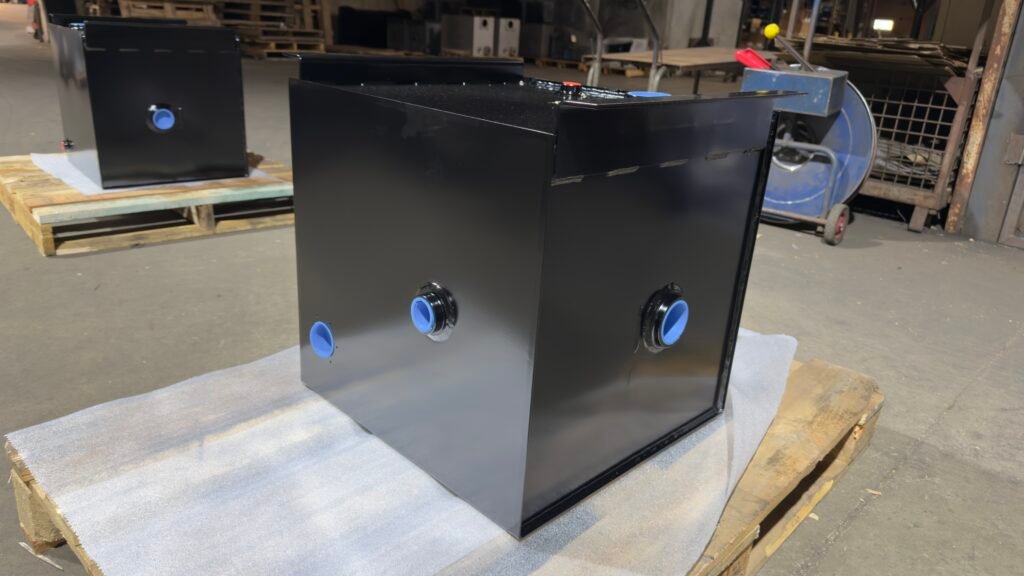
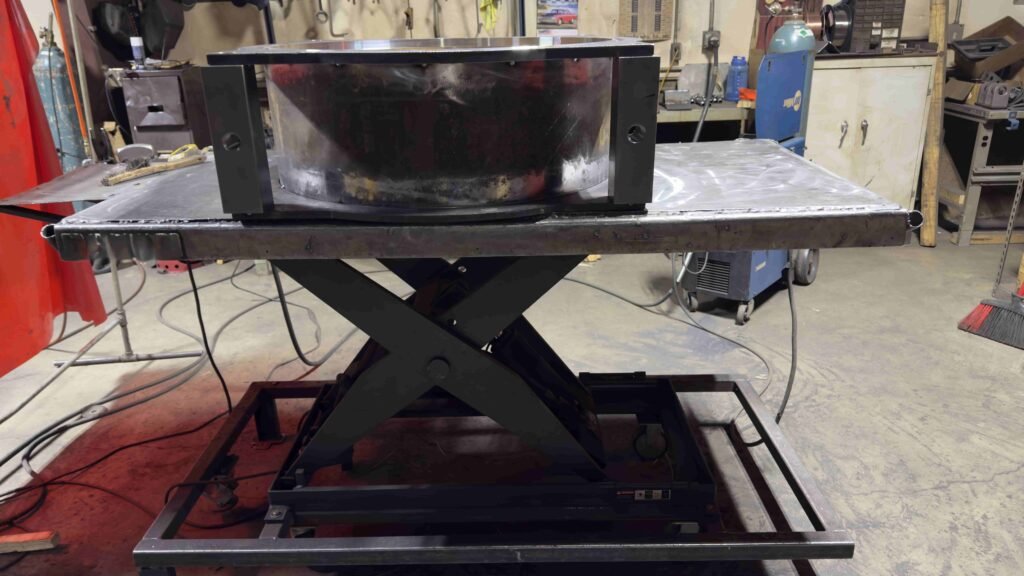
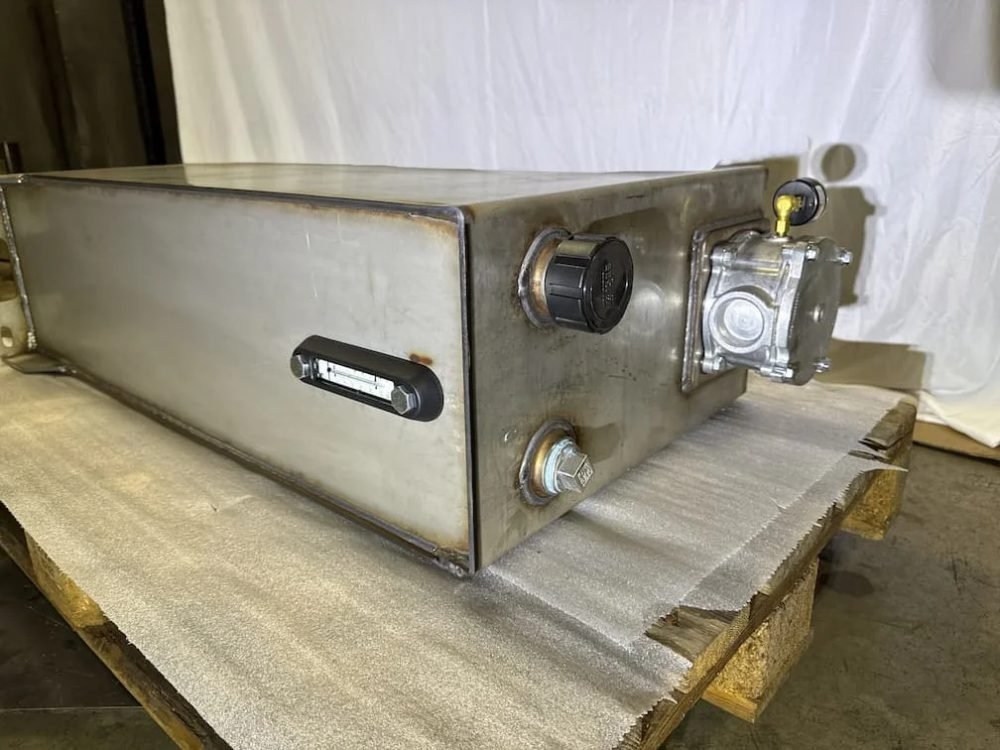
Heavy weldments and reservoirs built to drawing
Shop details
Materials, processes, and quantities
| Materials | Carbon steel, stainless steel, and aluminum |
|---|---|
| Welding | AWS D1.1 certified MIG welding, robotic and manual |
| In-house process | Plasma cutting, press brake forming, welding, leak testing, and finishing |
| Quantities | One-off prototypes through ongoing production runs |
| Quoting from | DWG, DXF, STEP, PDF prints, or a physical sample |
| Hydraulic tanks | Custom ports, baffles, drains, breathers, sight gauges, and mounting |
| Finishes | Powder coating, paint to your color, primed, or bare |
| Documentation | First article inspection and material certs available on request |
| Operating since | 2002 |
Service area
Serving manufacturers across North Dakota
North Dakota is a freight program rather than a delivery run, and we manage it that way from Anamosa. CAD files, revisions, and first-article documentation are exchanged electronically, production parts move by common carrier, and orders are consolidated where possible to hold your shipping cost down.
Fargo, Bismarck, Grand Forks, Minot, West Fargo, Williston, Dickinson, Mandan, Jamestown, Devils Lake, and every other community in North Dakota.
Questions
What North Dakota customers ask
How do you handle freight to North Dakota?
Parts are skidded or crated for LTL freight from our Anamosa, Iowa shop, and we consolidate multi-unit orders onto a single skid where the geometry allows it. Tell us at quoting whether you have dock access or need liftgate delivery, since that changes how we package the run.
What size hydraulic reservoir do I need?
A common starting point is two to three times the pump's flow rate in GPM, so a 20 GPM pump suggests a 40 to 60 gallon reservoir. That is only a starting point. Duty cycle, heat load, cylinder volume, and available cooling all move the number, and mobile equipment often needs a smarter design rather than a bigger tank because the space and the airflow are both limited. Tell us the pump flow and how hard the system works and we will talk it through before anything gets cut.
What do baffles do, and does my tank need them?
Baffles are internal plates that force returning oil to take the long way around before the pump picks it up again. That extra dwell time lets air separate out and contaminants settle instead of getting pulled straight back into the system. They also stiffen the tank walls against pump pulsation, which reduces fatigue cracking at the welds over time. Most reservoirs benefit from at least one; the height and placement depend on your flow rate and tank geometry.
Should my tank be carbon steel or stainless?
Carbon steel is the default and it is the right answer for most builds. It is strong, economical, welds well, and takes powder coat well. Stainless makes sense when the environment demands it: washdown areas, food and beverage plants, marine or coastal equipment, or corrosive chemical exposure. Most systems do not need stainless, but the ones that do really do. Describe the operating environment and we will tell you honestly whether the premium is worth paying.
Are your welders certified?
Yes. We weld to AWS D1.1, the structural steel code, using robotic MIG for production repeatability and manual MIG or TIG where the joint calls for it. If your parts carry load or go into a safety-critical application, ask us for the specifics and we will give them to you.
Do you subcontract any of the welding or fabrication?
No. Plasma cutting, press brake forming, welding, leak testing, and finishing all happen in our own shop in Anamosa. That is worth asking any fabricator, because outsourced work means nobody can tell you who actually touched your part or what their process was.
What happens if a part fails first article inspection?
We find the cause before the production run starts, not after. That is the entire point of a first article. Over 80,000 hydraulic reservoirs have shipped from this shop with zero defects, and that record comes from catching problems at the first part rather than the hundredth.
Can you provide material certs and traceability?
Yes. First article inspection reports and mill certifications for raw material are available on request. If traceability is a contractual requirement on your end, tell us at the quote stage so it is built into the job rather than added on later.
What do you need from me to quote a job?
A print in DWG, DXF, STEP, or PDF form is fastest, and you can attach it directly to the quote form on this page. If you do not have a drawing, send photos of the part with overall dimensions and material thickness, or ship us a sample. For a hydraulic tank, we need capacity, envelope dimensions, material, port sizes and locations, mounting style, and finish.
Do you do one-off parts or only production runs?
Both, and there is no minimum order. We build single replacement parts and prototypes alongside ongoing production weldments. Repeat designs move to robotic welding once the first article is approved, which is what keeps later runs consistent and the per-part price down.
What is your typical lead time?
It depends on size, quantity, material availability, and current shop load. Tell us your required in-service date when you request the quote and we will confirm up front whether we can hit it, rather than finding out after you have placed the order.
Send us your drawing
Send your North Dakota drawing with quantity, delivery location, and any cold-service requirements. For hydraulic equipment, include the operating temperature range and pump flow so we can review reservoir capacity and breather selection rather than only the envelope.