Anamosa, Iowa — serving Michigan
Custom metal fabrication and welding for Michigan
Michigan manufacturers are accustomed to production discipline. For machinery, automation, truck equipment, tooling, and hydraulic systems, we provide fabricated weldments and reservoirs built from customer prints with a process designed for repeat releases.
- Upload a DWG, DXF, STEP, or PDF and we quote straight from it
- AWS D1.1 certified welding, robotic and manual
- Cutting, forming, welding, leak testing, and finishing under one roof
- Over 80,000 hydraulic reservoirs delivered since 2002
Get a fast quote
Tell us roughly what you need and attach your drawing if you have one. We come back with questions and a price — no full spec required to start.
- 2002
- Fabricating in Iowa since
- 80,000+
- Hydraulic reservoirs delivered
- AWS D1.1
- Certified MIG welding
- One part
- Minimum order
Industries we serve
Who we build for in Michigan
Michigan has a deep supplier base, so an outside fabricator has to earn its place by being responsive, consistent, and easy for engineering and purchasing to work with. We focus on welded assemblies, tanks, frames, brackets, and low-to-medium volume production where process control matters.
Industrial automation and machinery
Welded bases, frames, guards, brackets, and equipment structures for automation cells and production machinery.
Truck and mobile equipment
Hydraulic reservoirs, mounts, frames, and fabricated components for work trucks, trailers, lifts, and mobile systems.
Tooling and production support
Fabricated fixtures, stands, platforms, and machine-support weldments built from drawings or existing samples.
OEM repeat production
First articles and scheduled weldment releases with fixtures and robotic welding used where they improve repeatability.
Capabilities
Print-driven fabrication for OEM supply chains
We focus on fabricated components that need a defined manufacturing process, from first article and fixture development through recurring production releases.
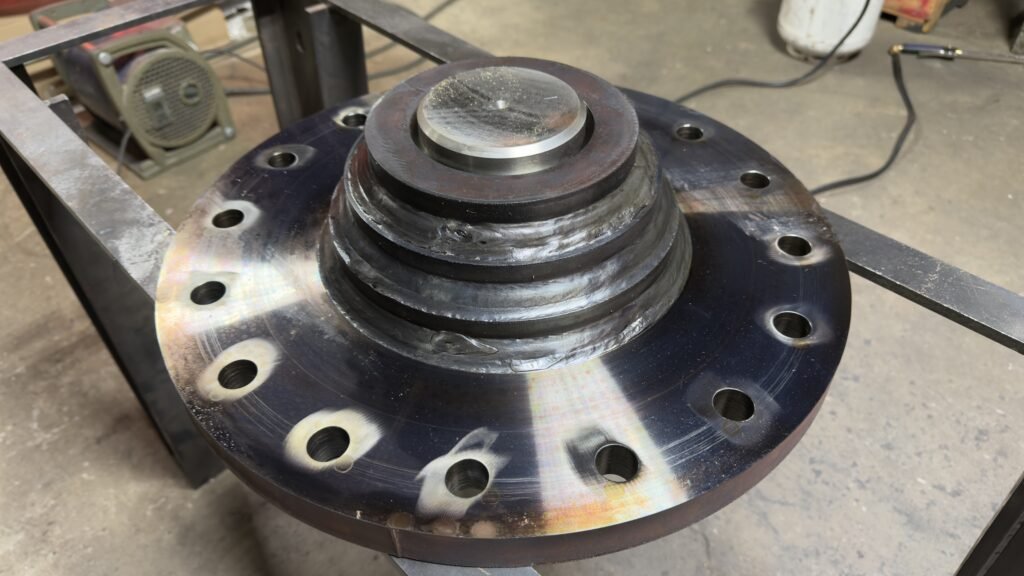
 Custom metal fabricationBuilt from your drawings, CAD files, or a physical sample.
- Production weldmentsRepeatable robotic MIG welding for ongoing OEM runs.
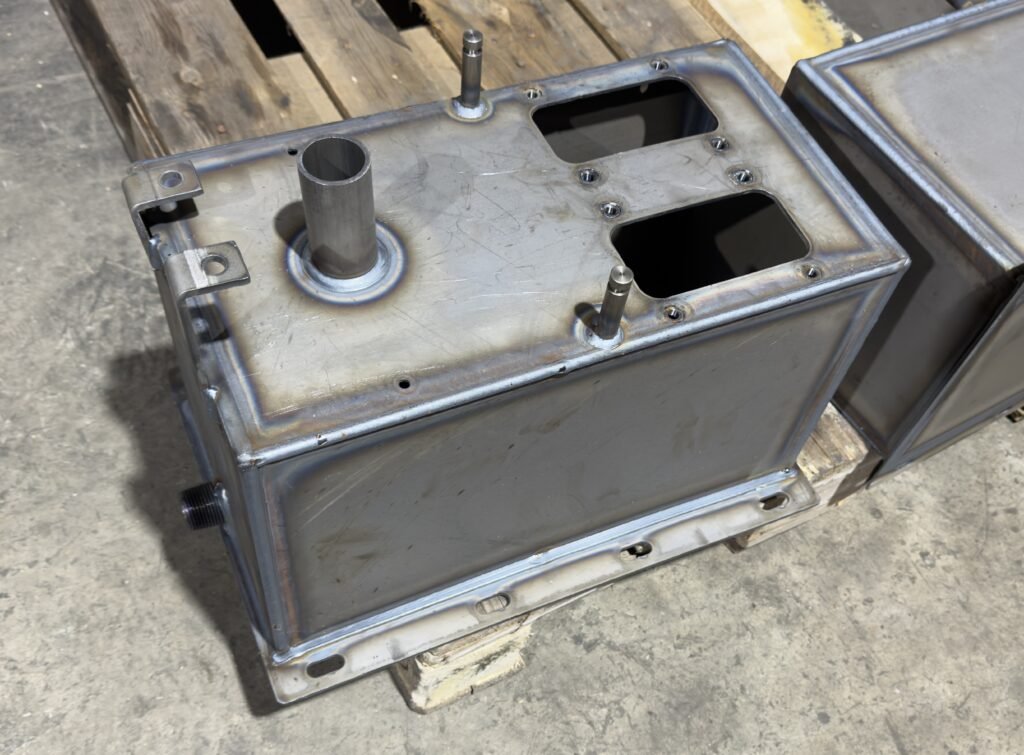
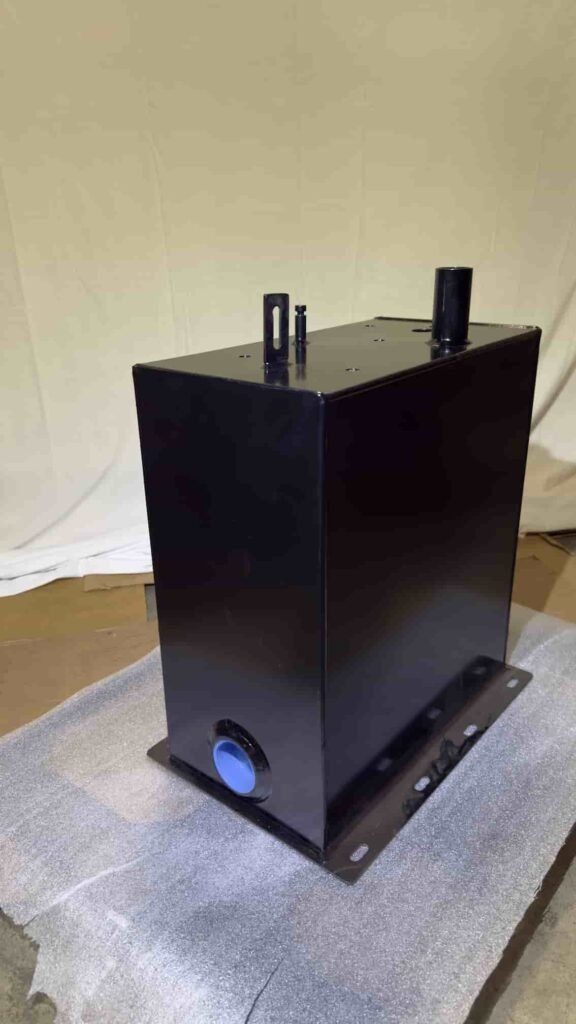
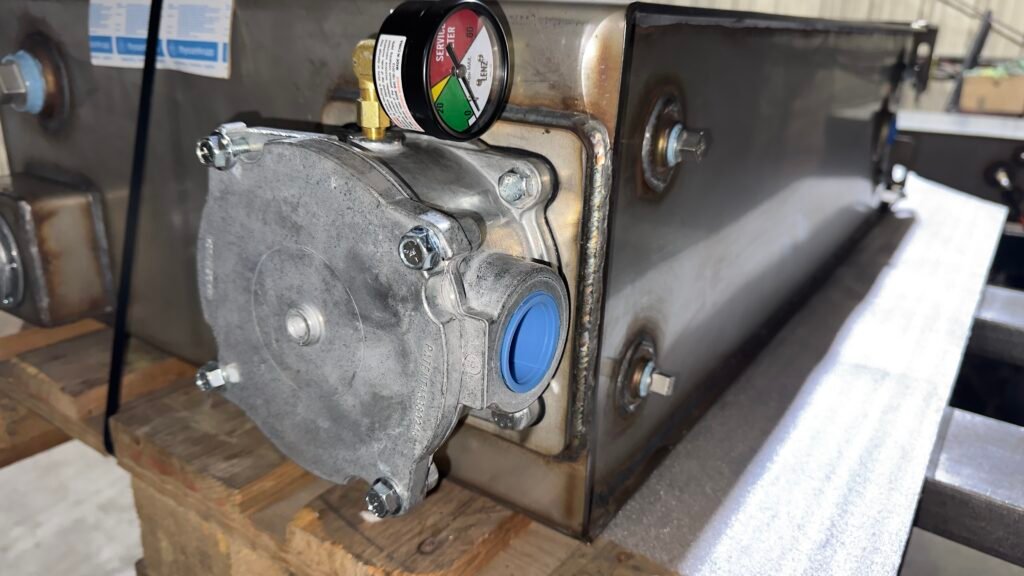
- Hydraulic reservoir tanksSteel and stainless tanks with custom ports, baffles, and mounting.
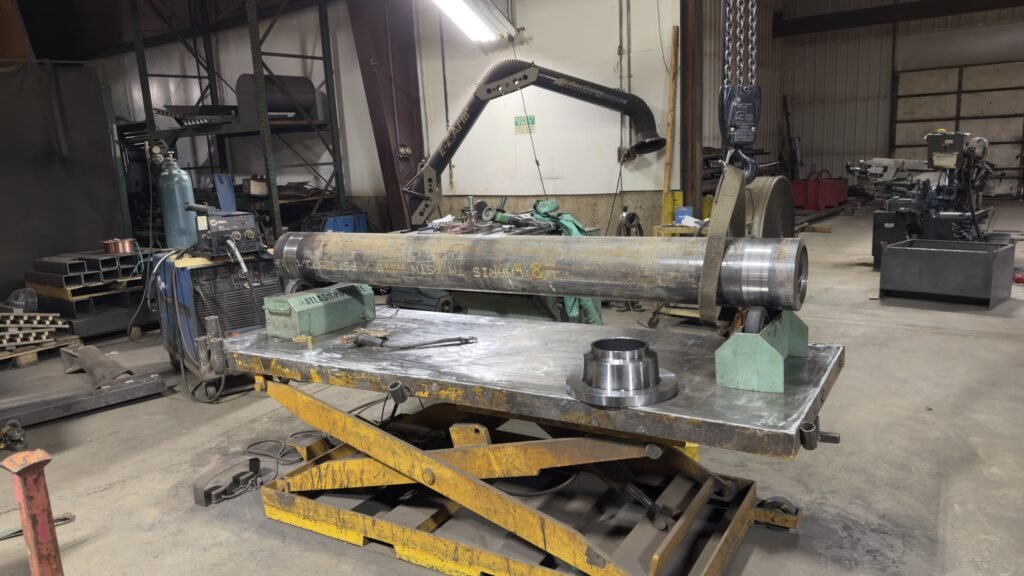
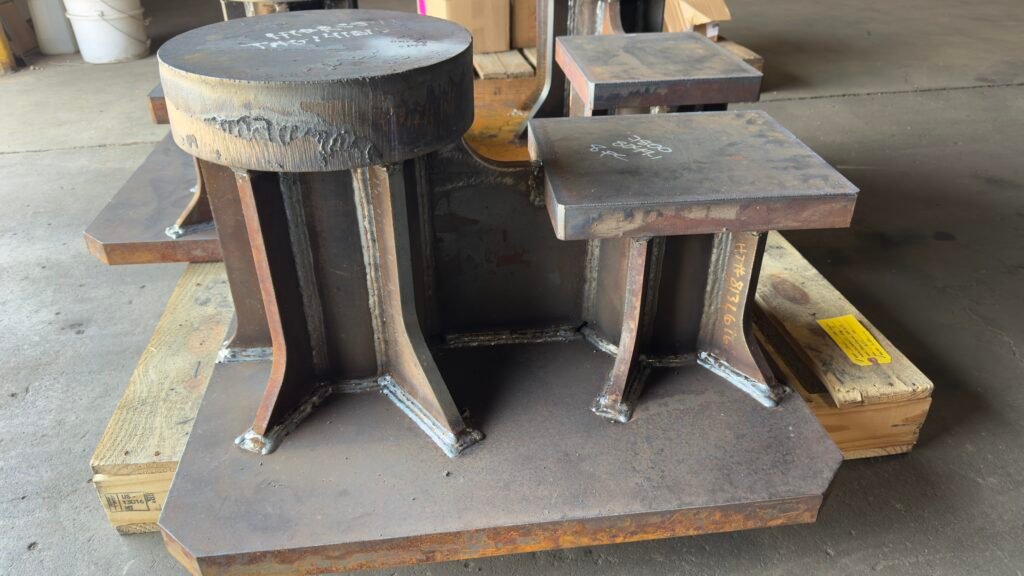
- Welded assembliesFrames, brackets, guards, platforms, and multi-part assemblies.
- Prototype and short runOne-off parts and first articles before you commit to production.
- Repair and modificationRework and reinforcement on existing equipment and components.
Why Michigan manufacturers use us
A fabrication process purchasing can repeat
For recurring work, the goal is not simply to make one acceptable part. The goal is to establish a build method that can be repeated. We retain job knowledge, fixtures, and robotic programs where applicable so future releases do not restart from zero.
The work you cannot see in a photo is the rework we did not have to do.
Recent work
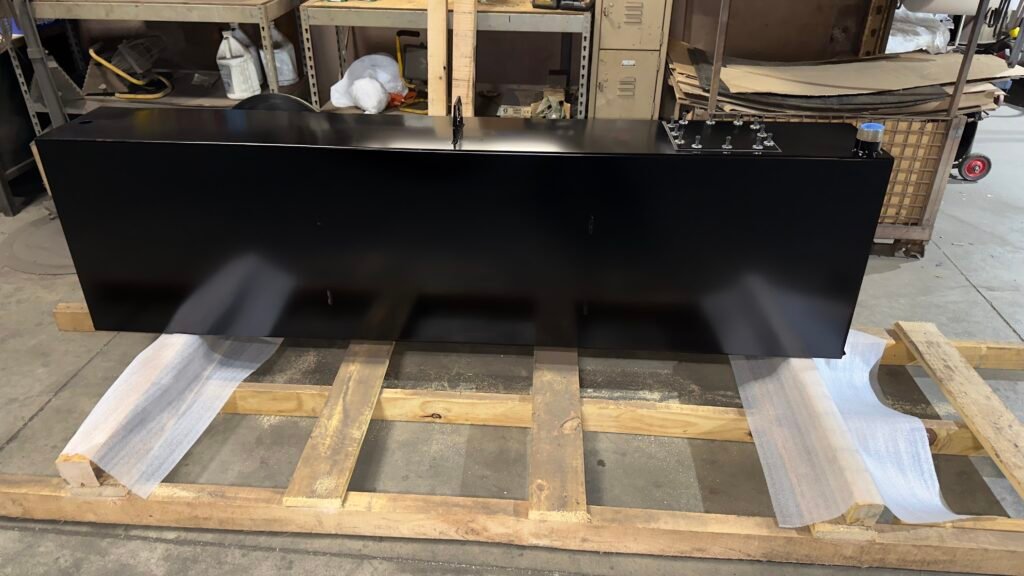
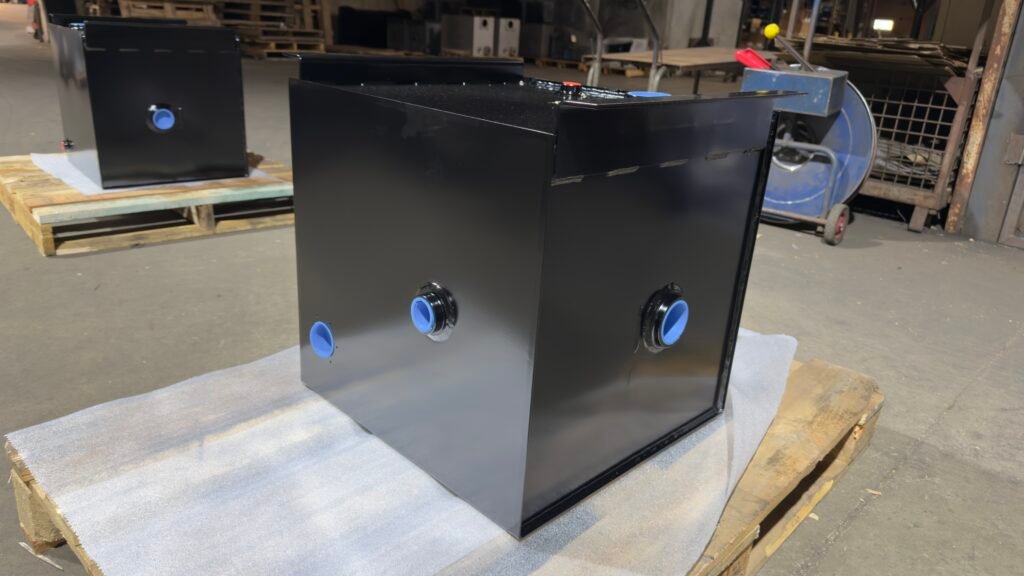
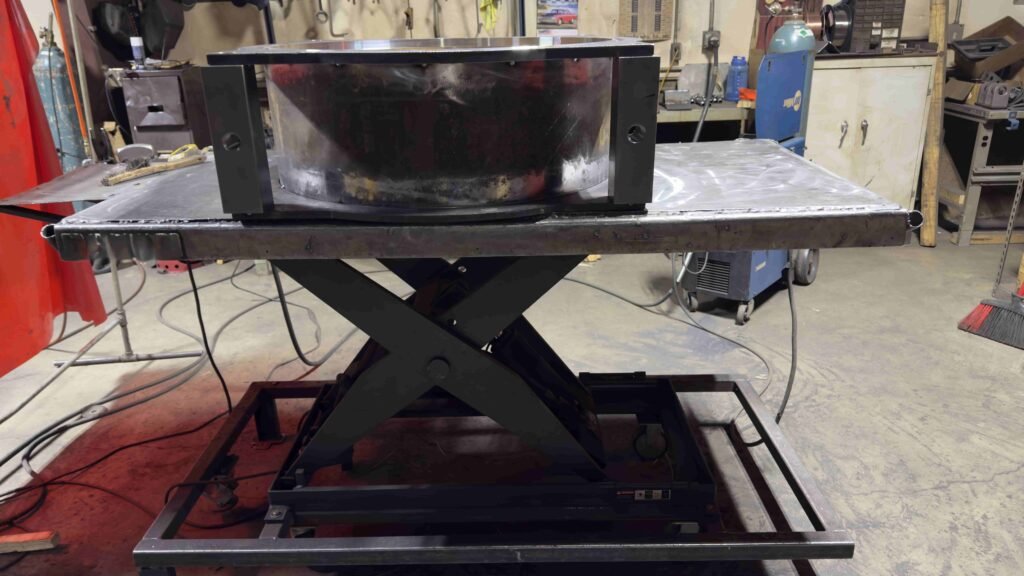
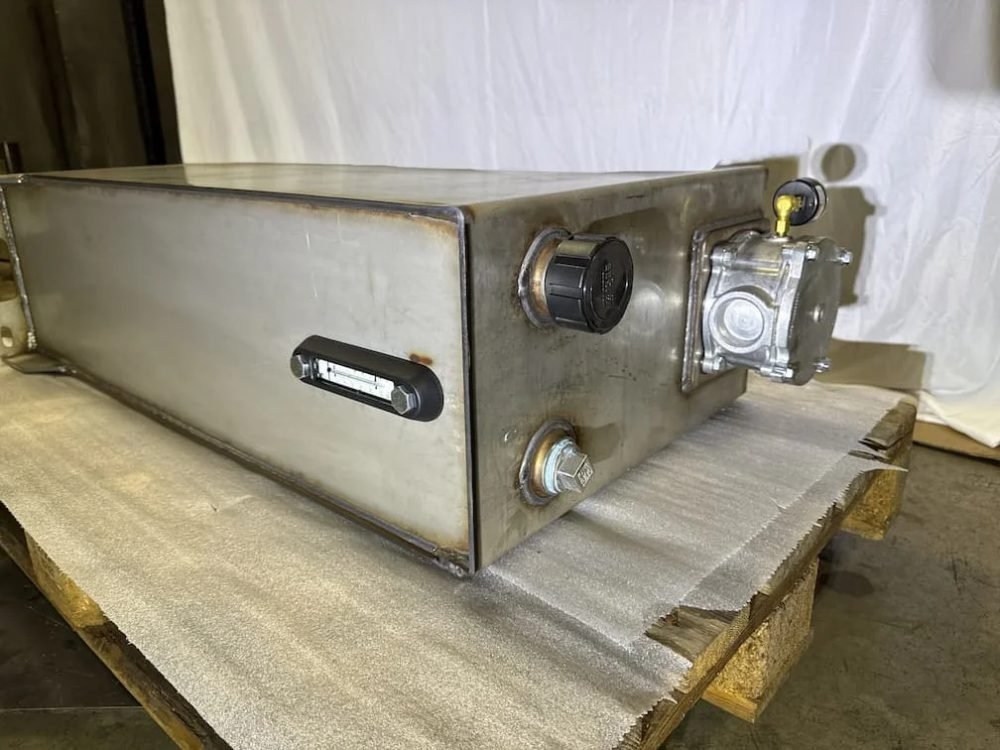
Fabricated components built for repeat orders
Shop details
Materials, processes, and quantities
| Materials | Carbon steel, stainless steel, and aluminum |
|---|---|
| Welding | AWS D1.1 certified MIG welding, robotic and manual |
| In-house process | Plasma cutting, press brake forming, welding, leak testing, and finishing |
| Quantities | One-off prototypes through ongoing production runs |
| Quoting from | DWG, DXF, STEP, PDF prints, or a physical sample |
| Hydraulic tanks | Custom ports, baffles, drains, breathers, sight gauges, and mounting |
| Finishes | Powder coating, paint to your color, primed, or bare |
| Documentation | First article inspection and material certs available on request |
| Operating since | 2002 |
Service area
Serving manufacturers across Michigan
Michigan is farther from our Anamosa shop than our immediate neighboring states, so we design the workflow around digital print review, documented first-article approval, and freight-efficient production releases. That makes the relationship practical even when a plant visit is not needed for every order.
Detroit, Grand Rapids, Warren, Lansing, Ann Arbor, Flint, Kalamazoo, Saginaw, Muskegon, Battle Creek, and every other community in Michigan.
Questions
What Michigan customers ask
Do you build to customer drawings and hold specified tolerances?
Yes. Send a DWG, DXF, STEP, or PDF and we quote from it directly. If something in the drawing will cause a problem in fabrication, we flag it before we cut steel rather than building it wrong and arguing about it later.
What size hydraulic reservoir do I need?
A common starting point is two to three times the pump's flow rate in GPM, so a 20 GPM pump suggests a 40 to 60 gallon reservoir. That is only a starting point. Duty cycle, heat load, cylinder volume, and available cooling all move the number, and mobile equipment often needs a smarter design rather than a bigger tank because the space and the airflow are both limited. Tell us the pump flow and how hard the system works and we will talk it through before anything gets cut.
What do baffles do, and does my tank need them?
Baffles are internal plates that force returning oil to take the long way around before the pump picks it up again. That extra dwell time lets air separate out and contaminants settle instead of getting pulled straight back into the system. They also stiffen the tank walls against pump pulsation, which reduces fatigue cracking at the welds over time. Most reservoirs benefit from at least one; the height and placement depend on your flow rate and tank geometry.
Should my tank be carbon steel or stainless?
Carbon steel is the default and it is the right answer for most builds. It is strong, economical, welds well, and takes powder coat well. Stainless makes sense when the environment demands it: washdown areas, food and beverage plants, marine or coastal equipment, or corrosive chemical exposure. Most systems do not need stainless, but the ones that do really do. Describe the operating environment and we will tell you honestly whether the premium is worth paying.
Are your welders certified?
Yes. We weld to AWS D1.1, the structural steel code, using robotic MIG for production repeatability and manual MIG or TIG where the joint calls for it. If your parts carry load or go into a safety-critical application, ask us for the specifics and we will give them to you.
Do you subcontract any of the welding or fabrication?
No. Plasma cutting, press brake forming, welding, leak testing, and finishing all happen in our own shop in Anamosa. That is worth asking any fabricator, because outsourced work means nobody can tell you who actually touched your part or what their process was.
What happens if a part fails first article inspection?
We find the cause before the production run starts, not after. That is the entire point of a first article. Over 80,000 hydraulic reservoirs have shipped from this shop with zero defects, and that record comes from catching problems at the first part rather than the hundredth.
Can you provide material certs and traceability?
Yes. First article inspection reports and mill certifications for raw material are available on request. If traceability is a contractual requirement on your end, tell us at the quote stage so it is built into the job rather than added on later.
What do you need from me to quote a job?
A print in DWG, DXF, STEP, or PDF form is fastest, and you can attach it directly to the quote form on this page. If you do not have a drawing, send photos of the part with overall dimensions and material thickness, or ship us a sample. For a hydraulic tank, we need capacity, envelope dimensions, material, port sizes and locations, mounting style, and finish.
Do you do one-off parts or only production runs?
Both, and there is no minimum order. We build single replacement parts and prototypes alongside ongoing production weldments. Repeat designs move to robotic welding once the first article is approved, which is what keeps later runs consistent and the per-part price down.
What is your typical lead time?
It depends on size, quantity, material availability, and current shop load. Tell us your required in-service date when you request the quote and we will confirm up front whether we can hit it, rather than finding out after you have placed the order.
Send us your drawing
If you are comparing fabrication sources for a Michigan program, send the print package and expected release quantities. We can quote the fabricated scope and identify where material, weld callouts, inspection, or finishing requirements affect cost.