Repair Welding vs Replacing an Industrial Component: How to Decide
A cracked frame, a broken bracket, a worn bucket lip — every maintenance manager eventually faces the same call: send it out for repair welding, or buy new? There’s no universal answer, but there is a reliable way to think it through. We handle industrial equipment repair welding every week at our shop in Anamosa, Iowa, and we also fabricate new components from scratch — so we can tell you honestly when each one makes sense.
When Repair Welding Makes Sense
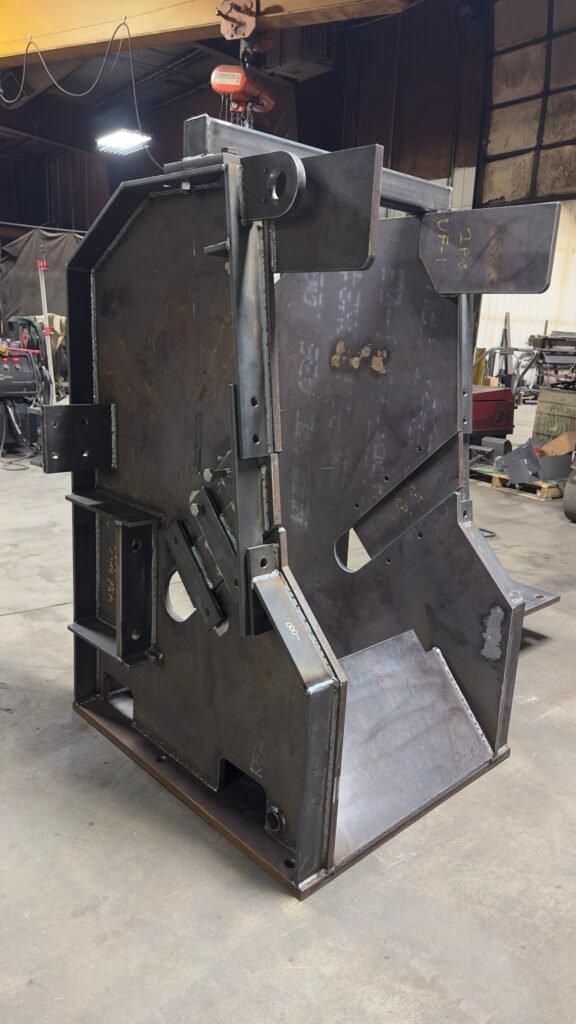
Repair welding is usually the right call when four things line up:
- The base metal is sound. A clean crack or a broken weld in otherwise healthy steel repairs beautifully. Weld repair restores the joint; it can’t restore metal that’s rusted thin, fatigued throughout, or repeatedly patched.
- The part is expensive or slow to replace. Custom components, obsolete parts, and anything with a long lead time tilt hard toward repair — a weekend repair beats a six-week wait for a new weldment.
- Downtime costs more than the fix. During planting, harvest, or a production crunch, getting equipment back to work fast is worth more than a like-new part later.
- The failure cause is understood. If the part broke from a one-time overload or impact, a proper repair — often with reinforcement — ends the problem. If it failed from a design flaw, repair plus modification (gussets, thicker material, better joint design) beats replacing it with an identical part that will fail identically.
When Replacement Is the Better Call
Replace rather than repair when the base metal itself is the problem: section loss from corrosion, widespread fatigue cracking, or a component that’s been repaired so many times there’s more weld than parent metal. Replace, too, when the part is a cheap commodity — nobody should pay shop time to repair a $40 off-the-shelf bracket — or when a safety-critical component’s history can’t be verified. And sometimes “replace” really means “replace with better”: we regularly fabricate new components upgraded from the original design, which is often the smartest outcome of a failure.
What a Proper Weld Repair Involves
Good repair welding is more than running a bead over a crack. The process that makes repairs last:
- Find the whole crack — cracks run farther than they look; the visible end is rarely the real end.
- Drill-stop and prepare — stop-drilling the crack tip and grinding a proper weld prep so the repair achieves full penetration.
- Match the procedure to the material — correct filler, preheat where the section demands it, and controlled heat input to avoid creating new problems next to the old one.
- Reinforce intelligently — doublers or gussets where the load path caused the failure.
- Certified execution — our repair work is done by welders qualified to AWS D1.1, the same standard as our production work.
The Quick Decision Framework
Ask three questions. Is the surrounding metal sound? Is the part costly or slow to replace? Do we understand why it failed? Three yeses: repair it, possibly with reinforcement. Three noes: replace it. Mixed answers: send photos to a shop that does both repair welding and new fabrication, and get a recommendation from someone who profits either way — that’s the closest thing to unbiased advice you’ll find.
Frequently Asked Questions
Is a repaired weld as strong as the original?
Done correctly — full-penetration prep, right filler, qualified welder — a repair can meet or exceed original joint strength, especially when reinforcement addresses the cause of failure.
Can you modify a component instead of just repairing it?
Yes, and it’s often the best value: welded component modification lets us fix the break and correct the weak point at the same time.
How do I get a repair quote fast?
Photos of the damage, the part’s overall size, and the material (if known) are enough for a preliminary answer. Email them to contact@engineeredwelding.com and we’ll respond quickly.
Broken Part? Get an Honest Answer
Call 319-462-4840 or send photos and we’ll tell you straight — repair, modify, or replace. Learn more about our fabrication and repair services, or see our welding work for the Marion and Manchester areas.