Robotic vs Manual Welding: Which Is Right for OEM Production Parts?
The robotic vs manual welding question comes up in almost every conversation we have with OEM buyers, and the honest answer is: it depends on the part, the volume, and the tolerance for variation. We run both robotic MIG cells and certified manual welders on the same shop floor in Anamosa, Iowa, so we don’t have a horse in this race — we assign whichever process serves the part best. Here’s how we make that call, and how you should think about it for your production parts.
How Robotic Welding Improves Part Consistency
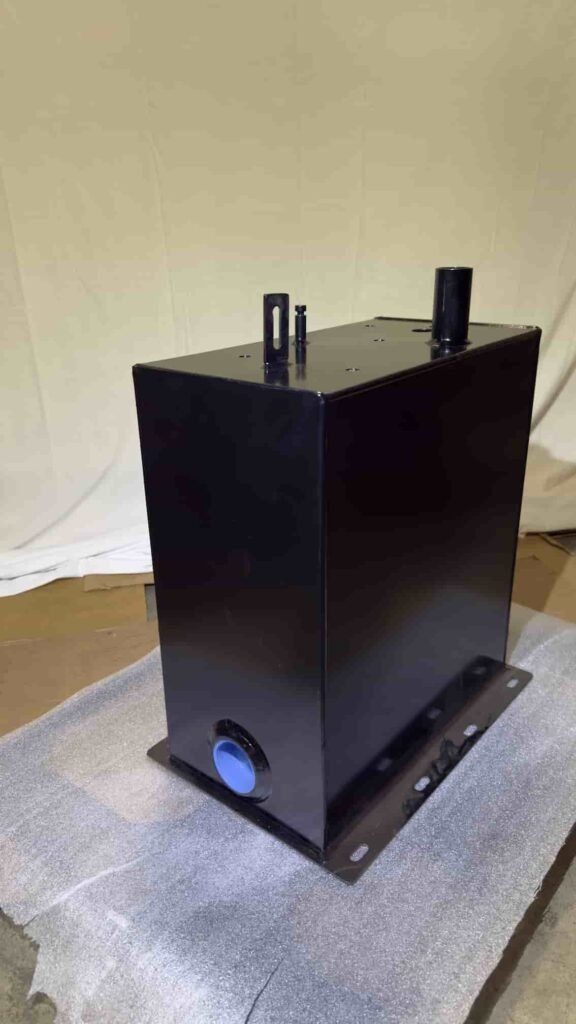
A robotic welding cell executes the exact same torch angle, travel speed, stick-out, and weave pattern on part one and part one thousand. There’s no fatigue at hour seven, no Monday-morning variation, no drift between operators. For OEM production, that repeatability shows up three ways:
- Dimensional consistency — identical heat input means identical distortion, so downstream fit-up and assembly stay predictable.
- Weld quality consistency — bead size, penetration, and appearance match across the entire run, which simplifies inspection.
- Throughput — the robot doesn’t slow down, which stabilizes lead times on repeat orders.
The catch is setup. Robotic welding needs fixturing and programming for each part number. That investment is trivial spread across hundreds or thousands of parts — and hard to justify for a one-off.
Where Manual Welding Still Wins
A skilled human welder adapts in real time. Fit-up a little tight on one side? A journeyman adjusts mid-bead without thinking about it. That adaptability makes manual welding the better choice for:
- One-offs, prototypes, and repairs — no fixture, no program, just a print and a qualified welder.
- Large or complex weldments — parts too big for a cell, or with joints a robot can’t reach.
- Low-volume variety — when every part is different, programming time would eat the savings.
- Repair and modification work — welding on worn or previously fabricated material demands judgment.
Quality isn’t the dividing line — a certified welder produces excellent welds, and a badly programmed robot produces consistent bad ones. The dividing line is repeatability at volume versus adaptability on variety.
What Welding Process Gives the Most Repeatable Results for Production Parts?
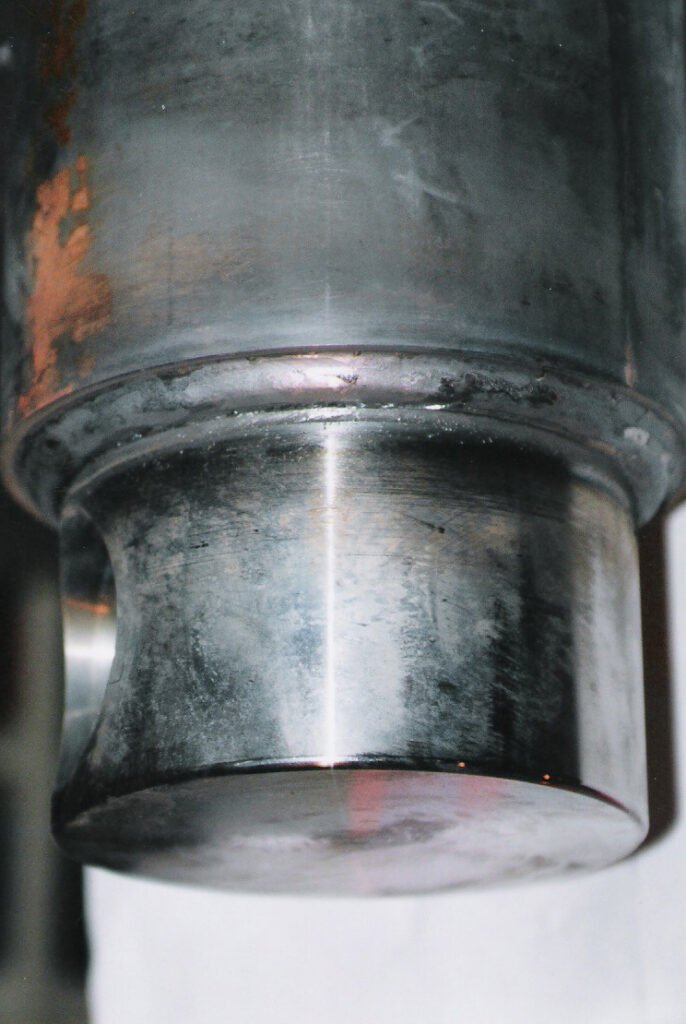
For most OEM production parts in carbon or stainless steel, robotic MIG (GMAW) welding delivers the best repeatability per dollar. The parts that fit robotic welding well share a profile: stable volume (dozens to thousands per run), consistent fit-up from accurately cut and formed blanks, and joints the torch can access from a fixtured position. Brackets, frames, guards, enclosures, and hydraulic tanks are classic candidates — we run all of them robotically every week.
One detail that matters more than the robot itself: upstream precision. Robotic welding is only as repeatable as the parts loaded into the fixture. That’s why we plasma-cut and press-brake-form blanks in-house — consistent blanks in, consistent weldments out.
The Cost Math: When Does Robotic Welding Pay Off?
Think of it as fixed cost versus variable cost. Robotic welding front-loads fixturing and programming, then produces each part faster and more consistently. Manual welding has almost no setup but a higher, more variable per-part cost. The crossover point varies with part complexity, but as a rule: recurring orders of the same part number favor the robot; anything under a few dozen pieces usually favors the hand.
The best answer for many OEMs is both — prototype and prove the design manually, then move to robotic welding when volume stabilizes. Because we run both processes under one roof, that transition doesn’t require changing suppliers.
Frequently Asked Questions
Is robotic welding stronger than manual welding?
Neither process is inherently stronger. Weld strength comes from correct joint design, procedure, and execution. Both our robotic and manual welding are held to AWS D1.1 structural standards.
When should a manufacturer use robotic welding?
When a part repeats — same geometry, steady volume, consistent fit-up. If you’re reordering the same weldment quarter after quarter, robotic welding will likely lower your cost and tighten your consistency.
Can one shop handle both my prototypes and production?
That’s exactly how we’re set up: manual welding for prototypes, one-offs, and repairs; robotic cells for production. One vendor, one quality standard, no re-sourcing.
Get a Production Welding Quote
Send your part drawing and expected volumes to contact@engineeredwelding.com or call 319-462-4840 and we’ll recommend the right process — honestly. See our full fabrication services, browse the gallery, or learn about our work for manufacturers in Cedar Rapids and Dubuque.