
1/ 4 tank of diesel how many miles semi truck
Most drivers know their rig drinks diesel like it’s going out of style — but fewer actually know the exact numbers behind their fuel tank setup. Whether you’re managing a fleet, spec’ing a new truck, or considering a custom fabrication, understanding semi truck fuel tank capacity is one of the most practical things you can know about your equipment.
In this guide, we’ll break down standard tank sizes by model, real-world range, fuel weight, dual-tank configurations, what affects tank size, DOT considerations, and when a custom-built diesel fuel tank is worth exploring.
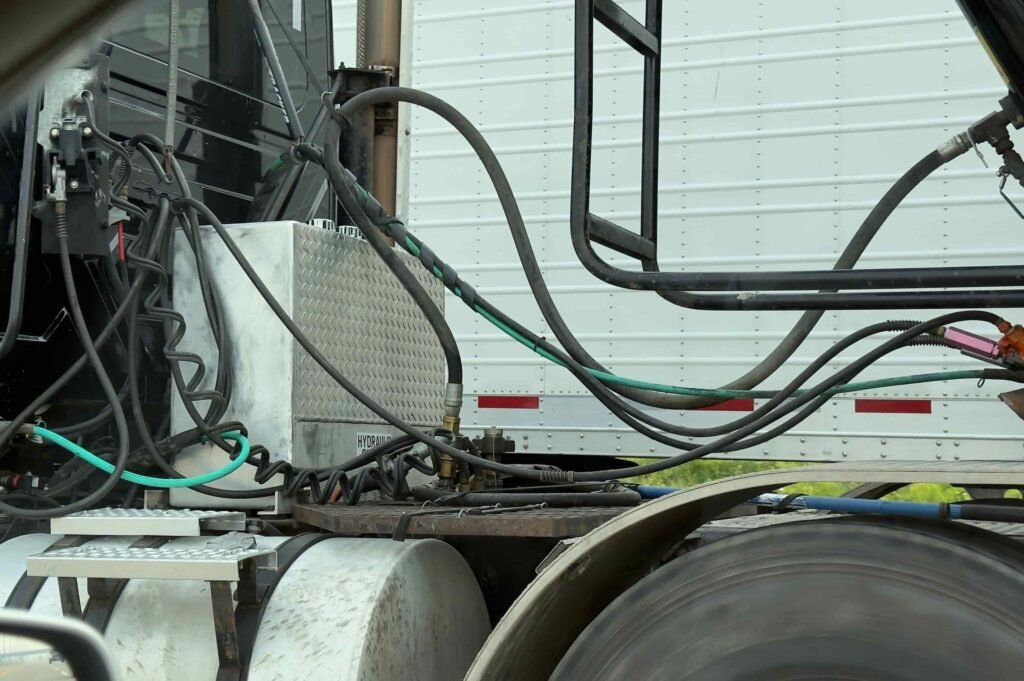
What Is the Standard Semi Truck Fuel Tank Capacity?
The short answer: most semi trucks carry between 120 and 150 gallons per tank.
Since the vast majority of long-haul rigs run dual tanks — one mounted on each side of the chassis — total semi truck fuel tank capacity typically lands between 200 and 300 gallons. Some specialized long-range models push even higher, with custom configurations reaching 400 gallons or more.
Here’s a quick breakdown by setup:
| Configuration | Capacity Range |
|---|---|
| Single tank (regional) | 100–150 gallons |
| Dual tanks (standard OTR) | 200–300 gallons |
| Custom extended-range | 300–400+ gallons |
The exact capacity depends on the truck’s make and model, its intended use (regional vs. over-the-road), and whether the original OEM fuel tank has been replaced or supplemented with a custom unit.
Semi Truck Fuel Tank Capacity by Truck Model
OEM fuel tank sizes vary by manufacturer and configuration. Here’s a reference for common trucks you’ll see on the road:
| Truck Model | Typical Fuel Tank Capacity |
|---|---|
| Freightliner Cascadia | 120–300 gallons |
| Peterbilt 579 | 120–300 gallons |
| Kenworth T680 | 120–300 gallons |
| Volvo VNL | 150–300 gallons |
| International LT Series | 120–280 gallons |
| Mack Anthem | 120–280 gallons |
Most manufacturers offer the same platform in multiple tank configurations — regional specs run smaller single tanks, OTR specs run larger dual tanks. Actual capacity on any specific truck depends on how it was ordered and whether it’s been modified since.
Fuel Tank Capacity vs. Driving Range
Fuel efficiency and range go hand-in-hand, and the numbers matter when you’re planning routes and fuel stops.
The average semi truck gets roughly 6 to 7 miles per gallon under normal highway conditions. A heavy load, mountain grades, headwinds, or idle time all drag that number down.
Here’s how tank capacity translates to usable range at 6 MPG:
| Fuel Capacity | Range @ 6 MPG | Range @ 7 MPG |
|---|---|---|
| 100 gallons | 600 miles | 700 miles |
| 150 gallons | 900 miles | 1,050 miles |
| 200 gallons | 1,200 miles | 1,400 miles |
| 250 gallons | 1,500 miles | 1,750 miles |
| 300 gallons | 1,800 miles | 2,100 miles |
| 400 gallons | 2,400 miles | 2,800 miles |
That’s why dual tanks are practically standard for over-the-road operations. Fewer stops means more miles covered, more on-time deliveries, and more opportunities for drivers to fuel up where diesel prices are lower — which matters when you’re buying fuel at scale across an entire fleet.
How Much Does a Full Fuel Load Weigh?
This is where semi truck fuel tank capacity gets real for fleet managers. Diesel weighs approximately 7 pounds per gallon, and that adds up fast.
| Tank Capacity | Approx. Fuel Weight |
|---|---|
| 100 gallons | 700 lbs |
| 150 gallons | 1,050 lbs |
| 200 gallons | 1,400 lbs |
| 250 gallons | 1,750 lbs |
| 300 gallons | 2,100 lbs |
| 400 gallons | 2,800 lbs |
For trucks already running close to the FMCSA’s 80,000-pound gross vehicle weight limit, carrying a full 300-gallon load — over a ton of fuel alone — directly cuts into payload capacity. That tradeoff is worth calculating before spec’ing tank size on a new build or replacement.
The 95% Rule (And Why It Matters)
Here’s something a lot of newer drivers don’t know: you should never fill a semi’s fuel tanks to 100%.
Experienced drivers follow what’s commonly called the 95% rule. Fill to 95% capacity, leave a small air buffer at the top. The reasons are practical:
- Diesel expands with temperature changes — a full tank in the morning can overflow by midday in summer heat
- Overflow valves protect against spills, but they’re not a substitute for leaving headspace
- Spilled diesel creates an environmental hazard and can result in fines during inspections
The flip side is equally important. Most seasoned operators won’t let tanks drop below 25% capacity. Running near empty draws sediment and contaminants from the bottom of the diesel tank into the fuel system — rough on injectors and fuel pumps.
Simple rule: stay between 25% and 95% to protect your equipment and stay on the road.
Dual Fuel Tanks: The Standard for Long-Haul Rigs
For any truck covering serious miles, a dual-tank setup isn’t optional — it’s standard.
Two tanks, one on each side of the frame, offer several real advantages:
Extended range — More fuel means fewer stops, which translates directly to better productivity for drivers and fleet managers.
Weight distribution — Dual tanks help balance load across both sides of the truck, which matters for ride stability and tire wear over long hauls.
Fuel pricing flexibility — Drivers can top off strategically at stations with lower diesel prices and skip expensive stops on busy corridors.
Redundancy — If one tank develops an issue, operations don’t necessarily shut down completely while you wait for a repair.
One thing worth knowing: on most dual-tank setups, both tanks are cross-connected and feed the engine together. The driver doesn’t typically switch between them — the fuel system balances the draw automatically.
What Factors Affect Semi Truck Fuel Tank Size?
This is where the engineering gets interesting — and where most generic guides stop short.
Semi truck fuel tank size isn’t just about how much diesel you want to carry. There are real physical and regulatory constraints that determine what fits and what doesn’t:
Frame rail length — The tank has to fit between the cab and the rear axle cluster. Longer wheelbases generally allow larger tanks, but that space is also competing with other components.
DEF tank placement — Modern diesel trucks require a Diesel Exhaust Fluid (DEF) tank. That tank takes up frame real estate that used to be available for fuel, which is why some newer builds run slightly smaller fuel tanks than older equivalent models.
Battery box location — On many trucks, the battery boxes are frame-mounted in the same zone as the fuel tanks. Custom or oversized tanks have to work around them.
Axle loading and bridge laws — It’s not just about total gross weight. Federal bridge formula laws govern how weight is distributed across axles. A large fuel tank mounted in the wrong position can push an axle over its legal limit even if the truck is under 80,000 lbs overall.
Weight distribution — Fuel is dead weight that can’t shift like cargo. Where the tank sits affects handling, tire wear, and legal axle weights. Fabricators who understand truck chassis geometry factor this in during the design phase.
At Engineered Welding, we regularly work through these constraints when building custom diesel fuel tanks — the packaging is often as challenging as the fabrication itself.
DOT and FMCSA Considerations for Fuel Tanks
One question that comes up often: are there regulations that limit how big a semi truck fuel tank can be?
The short answer is that fuel tank capacity itself is not directly regulated by the DOT or FMCSA. There’s no rule that says a tank can only hold 300 gallons. What is regulated:
- Total gross vehicle weight — 80,000 lbs on federal highways without a permit
- Axle weight limits — typically 20,000 lbs per single axle, 34,000 lbs per tandem
- Fuel system mounting requirements — tanks must be securely mounted and protected from road debris and collision damage
- Filler and vent specifications — fuel caps and venting systems must prevent spillage and meet safety standards
If you’re adding an auxiliary fuel tank or replacing an OEM unit with a larger custom tank, the governing factor is almost always weight — whether the added fuel load keeps you within legal axle limits, not a cap on gallons.
When in doubt, work with a fabricator who understands both the structural requirements and the regulatory context. Getting the engineering right on the front end is cheaper than a failed inspection.
Aluminum vs. Steel Fuel Tanks
When spec’ing a custom semi truck fuel tank, material is one of the first decisions to make. Both options work — the right choice depends on the application.
Aluminum fuel tanks are the most common choice for on-highway trucks. Aluminum is naturally corrosion-resistant, which matters for a component that’s constantly exposed to road spray, salt, and moisture. It’s also significantly lighter than steel — on a truck where payload capacity is money, that weight savings matters. The tradeoff is that aluminum is harder to repair in the field if it gets damaged.
Steel fuel tanks cost less upfront and are more repairable. A steel tank that takes a hit from road debris can often be welded back up without replacing the whole unit. Steel is also the better choice in heavy-abuse environments — off-road, construction, or agricultural applications where the tank might take impacts that would crack aluminum. The downside is weight and the need for a protective coating to prevent rust.
| Aluminum | Steel | |
|---|---|---|
| Weight | Lighter | Heavier |
| Corrosion resistance | Excellent (no coating needed) | Requires coating |
| Repairability | Harder to field repair | Easier to weld repair |
| Cost | Higher | Lower |
| Best for | On-highway, weight-sensitive fleets | Off-road, heavy-duty, abuse environments |
Either way, a properly fabricated tank — with clean welds, correct baffling, and secure mounting — should outlast the truck it’s installed on.
When Standard OEM Tank Sizes Don’t Cut It
Standard OEM tanks are engineered for average use cases. Not every operation is average.
There are real situations where fleet managers or owner-operators start looking at custom fuel tank fabrication:
- Remote job sites or long routes with limited fuel access — a larger diesel tank means you’re not at the mercy of sparse fuel stops or emergency deliveries
- Older trucks where the original tank is corroded, leaking, or simply worn out and no longer available from the manufacturer
- Vocational and specialty vehicles — service trucks, equipment haulers, or work vehicles that weren’t designed for the routes they’re now running
- Fleet standardization — companies that want uniform tank capacity across mixed-model fleets regardless of OEM differences
- Auxiliary tank additions — adding a third tank to extend range without replacing the existing setup
At Engineered Welding, we build custom diesel fuel tanks to exact dimensional and capacity specifications. That means working from your truck’s actual frame dimensions, not an off-the-shelf catalog. Whether it’s a direct-fit OEM replacement or a completely new configuration, the goal is the same: a tank that fits right, holds what you need, and holds up for the long haul.
Signs It’s Time to Replace a Fuel Tank
Not sure if your current tank is still serviceable? Here’s what to watch for:
Visible corrosion or pitting — Surface rust on a steel tank doesn’t always mean immediate failure, but pitting that’s eaten through the wall is a different story.
Fuel odor without an obvious leak — Small seam cracks or pinhole corrosion can seep without a visible drip. If you’re smelling diesel around the frame, investigate.
Drop in fuel capacity — If the truck seems to need more fill-ups for the same route, a partially blocked internal baffle or sediment buildup may be restricting usable capacity.
Physical damage — A tank that’s taken a serious hit from road debris, a backing accident, or a rollover needs inspection before it goes back into service.
Catching tank issues early is always cheaper than dealing with a roadside breakdown or a fuel spill cleanup.
Fuel Tank Maintenance Tips for Fleet Operators
A well-built tank still needs attention over time. A few things worth building into your maintenance schedule:
Inspect for leaks at every PM interval. Check fittings, seams, mounting hardware, and the tank body. Diesel leaks are an environmental liability and a DOT inspection issue.
Keep tanks above the 25% mark. Especially in winter, when condensation is a bigger problem. Water at the bottom of a diesel tank feeds microbial growth that clogs filters and damages injectors.
Schedule a tank flush on high-mileage units. Sediment accumulates. On trucks with 500,000+ miles, a professional flush and internal inspection every few years is cheap insurance against fuel system damage downstream.
Check coatings on steel tanks annually. Chips and scratches in the protective coating are where corrosion starts. Touch up early, or plan for a replacement later.
Frequently Asked Questions
The Bottom Line
Semi truck fuel tank capacity isn’t one-size-fits-all. Standard OEM configurations get most operations where they need to go — but when your routes, equipment age, or payload demands push past what the factory tank was built for, custom fabrication is a practical and often cost-effective solution.
At Engineered Welding, we build custom diesel fuel tanks and hydraulic reservoirs designed for real-world applications. We work from your truck’s actual dimensions, understand the frame and weight constraints involved, and fabricate to hold up for the long haul.