Custom Hydraulic Reservoir Tanks for OEM Equipment
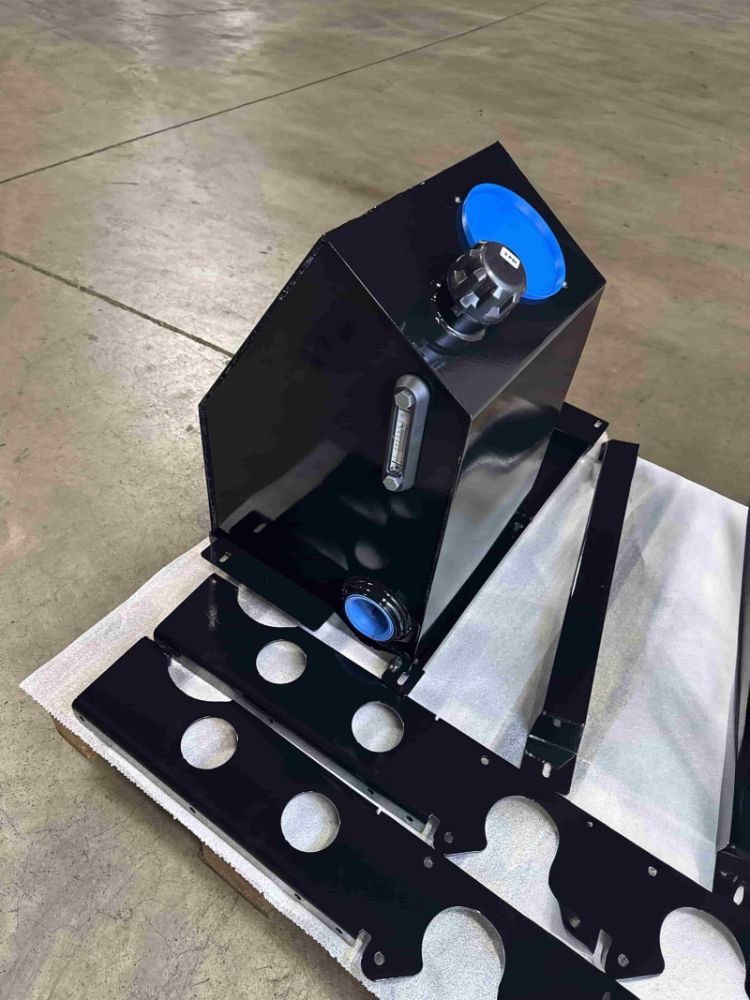
Engineered Welding designs and manufactures custom hydraulic reservoir tanks for OEM equipment builders, hydraulic power units, agricultural machinery, construction equipment, and industrial systems. Every reservoir is built in our Iowa facility using HD plasma cutting, CNC press brake forming, robotic and manual welding, leak testing, and in-house powder coating.
What Is a Hydraulic Reservoir Tank?
A hydraulic reservoir tank — sometimes called a hydraulic oil tank or oil reservoir — is the component of a hydraulic system that stores hydraulic fluid and conditions it before sending it back to the pump. It looks like a simple box, but a well-designed hydraulic fluid reservoir is doing several jobs at once, every second the system runs.
- Stores hydraulic fluid — holds the volume of oil needed to keep the pump supplied, plus reserve capacity for when cylinders extend.
- Removes heat — the tank’s surface area radiates heat out of the fluid and into the surrounding air.
- Removes air — gives entrained air bubbles time to rise to the surface and escape before fluid reaches the pump.
- Removes contaminants — slows fluid velocity so dirt, metal fines, and debris can settle out instead of recirculating.
- Supplies oil to the pump — delivers clean, de-aerated, temperature-stable fluid to the suction line on demand.
How Does a Hydraulic Reservoir Tank Work?
Every hydraulic reservoir works on the same basic cycle, whether it’s a 10-gallon unit on a skid steer or a 150-gallon tank on a stationary power unit.
- Oil return — fluid coming back from cylinders and valves enters the tank through the return port.
- Cooling — heat picked up in the system transfers from the fluid into the tank walls and surrounding air.
- Baffles — internal plates slow the fluid, separate the return side from the suction side, and calm turbulence.
- Air separation — the reduced velocity behind the baffle gives entrained air time to rise out of the fluid.
- Pump suction — cooled, de-aerated fluid is drawn from the suction side back into the pump to complete the cycle.
Types of Hydraulic Reservoir Tanks
Not every hydraulic reservoir tank looks or performs the same. The right type depends on the equipment, the fluid, and the space available.
Welded Steel
The most common construction for industrial and OEM hydraulic tanks — strong, weldable, and economical for high-volume production.
Stainless Steel
Used where corrosion resistance matters: washdown environments, food-grade equipment, marine applications, and chemical exposure.
Aluminum
Lightweight construction for mobile and aerial equipment where every pound affects payload or lift capacity.
Vertical Reservoirs
Smaller footprint, ideal for stationary hydraulic power units where floor space is limited but height is available.
Horizontal Reservoirs
More fluid surface area relative to height, improving heat dissipation and air separation — common on mobile equipment.
Mobile Equipment Tanks
Built to handle vibration, tilt, and temperature swings on tractors, trucks, and off-road machinery.
Hydraulic Power Unit Reservoirs
Sized and configured to match a specific pump, motor, and valve package for a self-contained HPU.
Why Choose a Custom Hydraulic Reservoir Tank?
Stock reservoirs are built to fit as many machines as possible — which usually means they fit none of them particularly well. A custom hydraulic reservoir tank is built around your equipment’s actual constraints, not a generic footprint.
- Exact dimensions for your equipment envelope
- Improved space utilization on tight chassis layouts
- Better cooling through a surface area matched to your heat load
- Easier maintenance with ports and covers placed where technicians can reach them
- OEM branding and finish options
- Custom port locations and sizes
- Mounting brackets built to your frame, not adapted after the fact
- Sensor and gauge locations positioned for your control system
- Higher reliability from a tank engineered for its actual duty cycle
Custom Manufacturer vs. Catalog Supplier
Here’s how a custom-built hydraulic reservoir tank generally compares to an off-the-shelf catalog unit:
| Feature | Engineered Welding (Custom) | Typical Catalog Supplier |
|---|---|---|
| Custom size & port layout | Yes | No |
| CAD design support | Yes | No |
| Leak tested before shipment | Every unit | Varies by supplier |
| Powder coated finish | Yes, in-house | Sometimes, as an add-on |
| Prototype quantities | Yes | Usually not |
| Production quantities | Yes | Limited by stock SKUs |
| Made in USA | Yes — Anamosa, Iowa | Varies |
General industry comparison for planning purposes — always confirm capabilities directly with any supplier you’re evaluating.
CUSTOM HYDRAULIC RESERVOIR TANK DESIGN
Every custom hydraulic reservoir tank we build starts with your CAD file or spec sheet. The core design decisions include:
- Tank dimensions
- Capacity
- Wall thickness
- Mounting configuration
- Port locations & sizes
- Internal baffles
- Clean-out cover
- Drain
- Sight gauge
- Filler breather
Wall thickness and mounting need to account for the weight of the fluid when full, plus vibration and shock loads on mobile equipment. We build to your drawing’s exact dimensions and port callouts rather than adapting a stock tank.
Hydraulic Reservoir Tank Sizing Guide
A common starting point for reservoir sizing is matching tank capacity to pump flow rate:
| Pump Flow | Recommended Tank Capacity |
|---|---|
| 5 GPM | 10 Gallons |
| 10 GPM | 20 Gallons |
| 25 GPM | 40 Gallons |
| 50 GPM | 75 Gallons |
These figures are general guidelines only. Actual sizing depends on duty cycle, heat load, ambient operating temperature, available cooling, and the fluid type in use. Systems running fire-resistant fluids, or systems without a cooler, typically need a larger reservoir relative to pump flow; systems with an oil cooler or two-stage pump can sometimes run smaller. For a deeper walkthrough with formulas, see our hydraulic reservoir tank sizing guide, or send us your pump specs and duty cycle and we’ll help you land on the right capacity.
Steel & Stainless Steel Hydraulic Reservoir Tanks
Carbon Steel
- Strong
- Economical
- Easy to repair
Stainless Steel
- Corrosion resistant
- Food applications
- Marine
- Chemical environments
Aluminum
- Lightweight
- Good corrosion resistance
HOW WE MANUFACTURE CUSTOM HYDRAULIC RESERVOIR TANKS
This is where a custom hydraulic reservoir manufacturer either performs or falls short. As a hydraulic tank manufacturer based in Anamosa, Iowa, our process runs entirely in our own facility, from CAD file to leak-tested, powder-coated tank.
1. CAD Design
We accept STEP, DXF, SolidWorks, and PDF files. Send your drawing and we quote directly from it — no translation, no guesswork.
2. HD Plasma Cutting
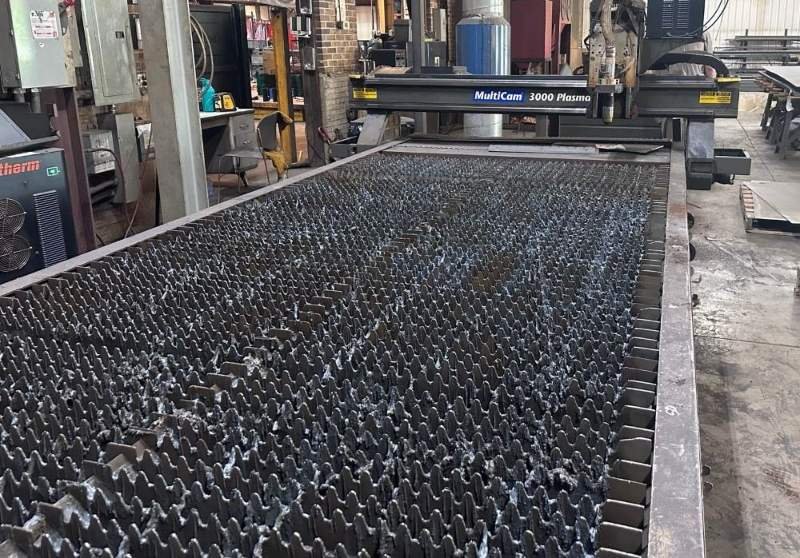
- Accurate profile cutting with ±0.001″ repeatability
- Heavy plate capability across steel, stainless, and aluminum
- Consistent parts, run after run, with no warping
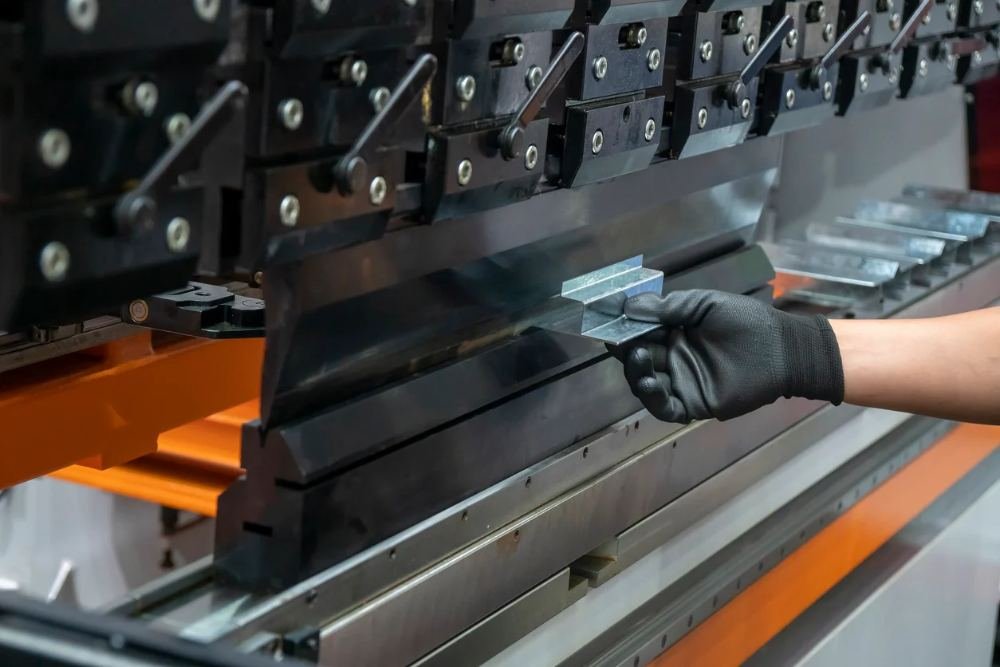
3. CNC Press Brake Forming
- Precision bends held to tight tolerances
- Repeatability across full production runs
- Capacity for mild steel, stainless, and aluminum up to 0.5″ thick
4. Robotic MIG Welding
- Consistent weld quality across every unit
- Production efficiency for multi-tank orders
5. Manual MIG & TIG Welding
Used for stainless steel tanks, prototypes, and complex assemblies where a certified welder’s judgment beats automation. All welders are trained to AWS D1.1 standards.
6. Leak Testing
- Pressure testing on every tank
- Visual and dimensional inspection
- Quality verification before the tank ships, with documented results available
We’ve built over 80,000 hydraulic reservoirs with zero defects — leak testing every unit before it leaves our shop is the reason why.

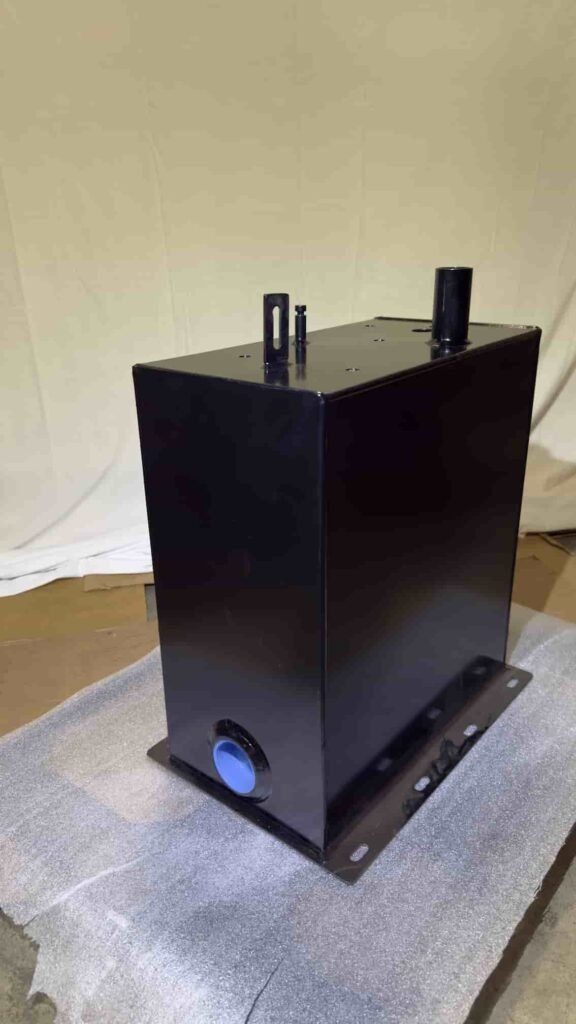
7. Powder Coating
- Corrosion protection that outperforms wet paint
- Longer service life in outdoor and industrial environments
- Professional, consistent finish
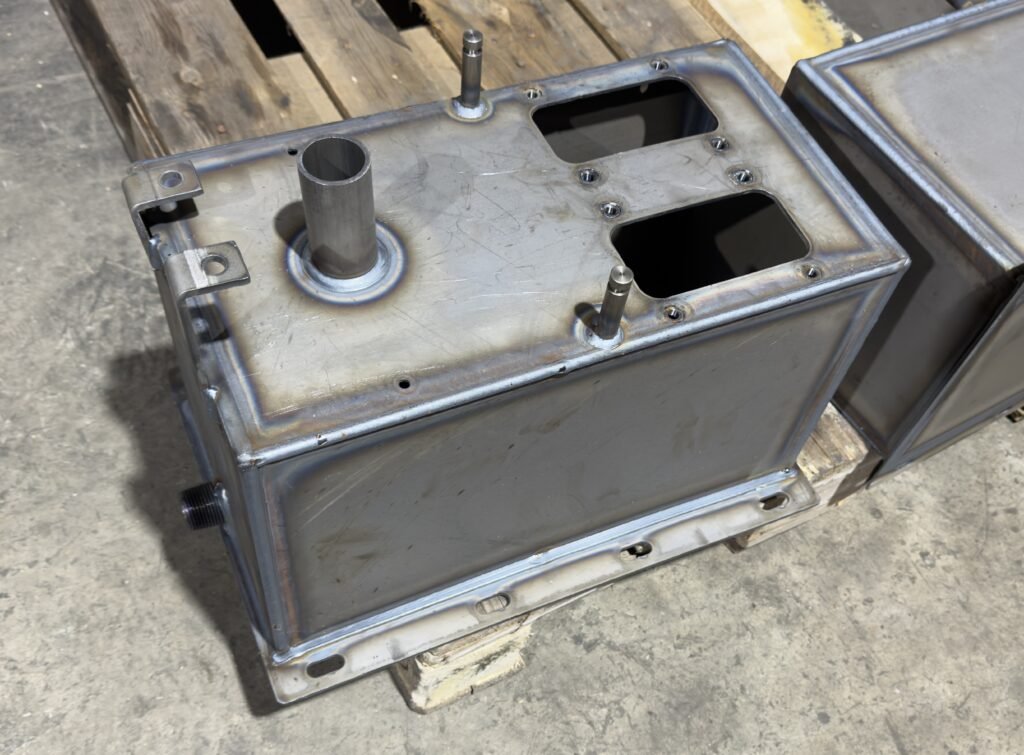
Standard Features
- Internal baffles
- Sight gauge
- Drain plug
- Suction port
- Return port
- Inspection cover
- Magnetic drain
- Mounting brackets
- Filler breather
- Temperature gauge
Recent Hydraulic Reservoir Projects
A look at representative reservoir builds from our Anamosa, Iowa shop.
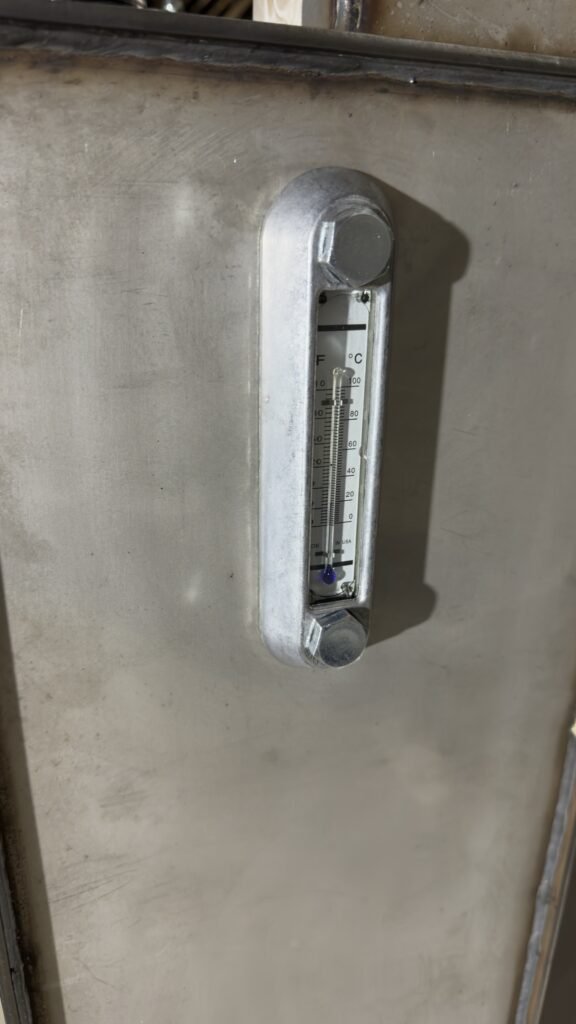 Agricultural & Mobile
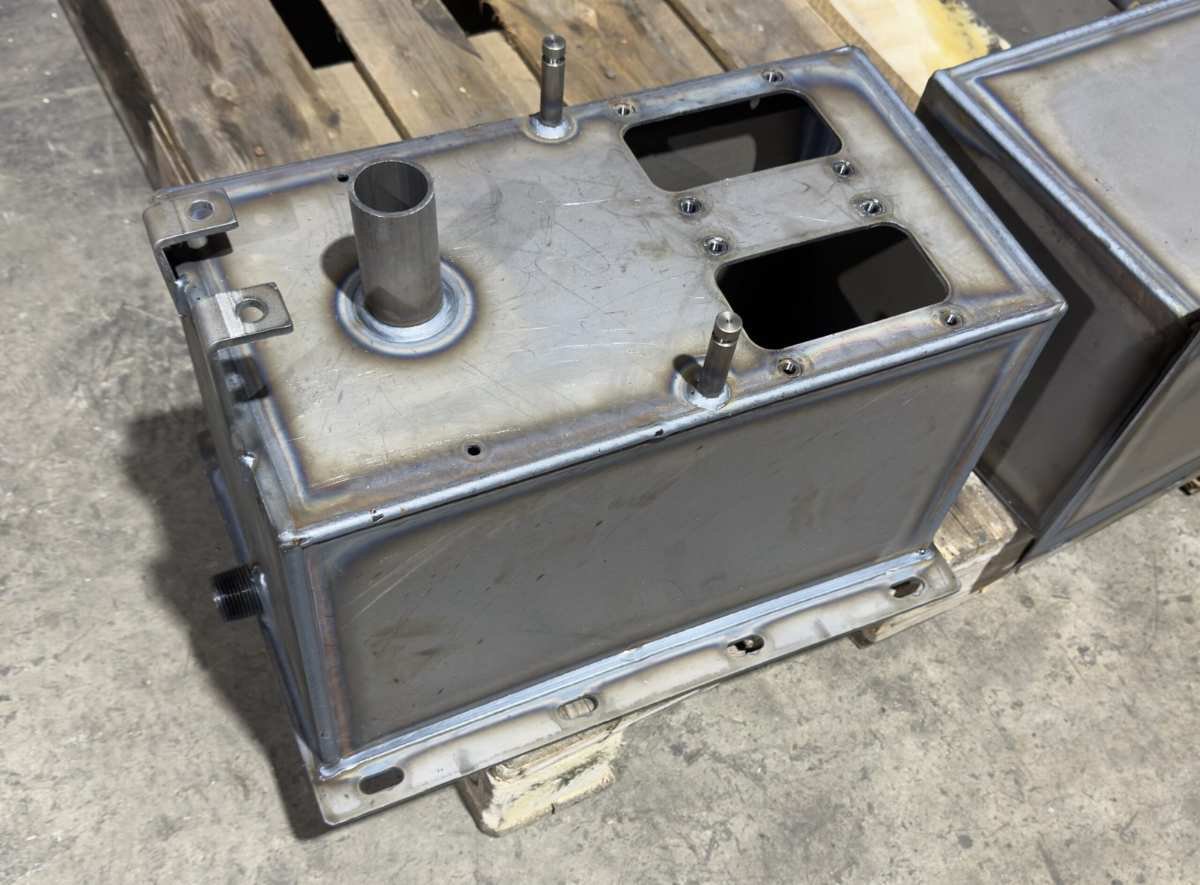
Compact Reservoir, Sight Gauge & Temp Indicator
Built for space-constrained mobile equipment where operators need a quick visual fluid check in the field.
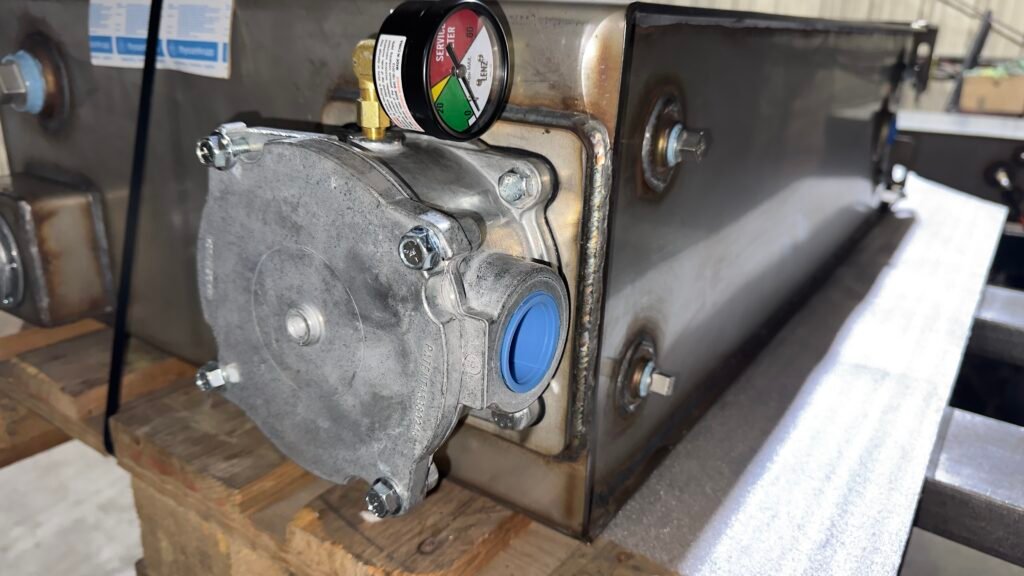 Washdown / Food-Grade
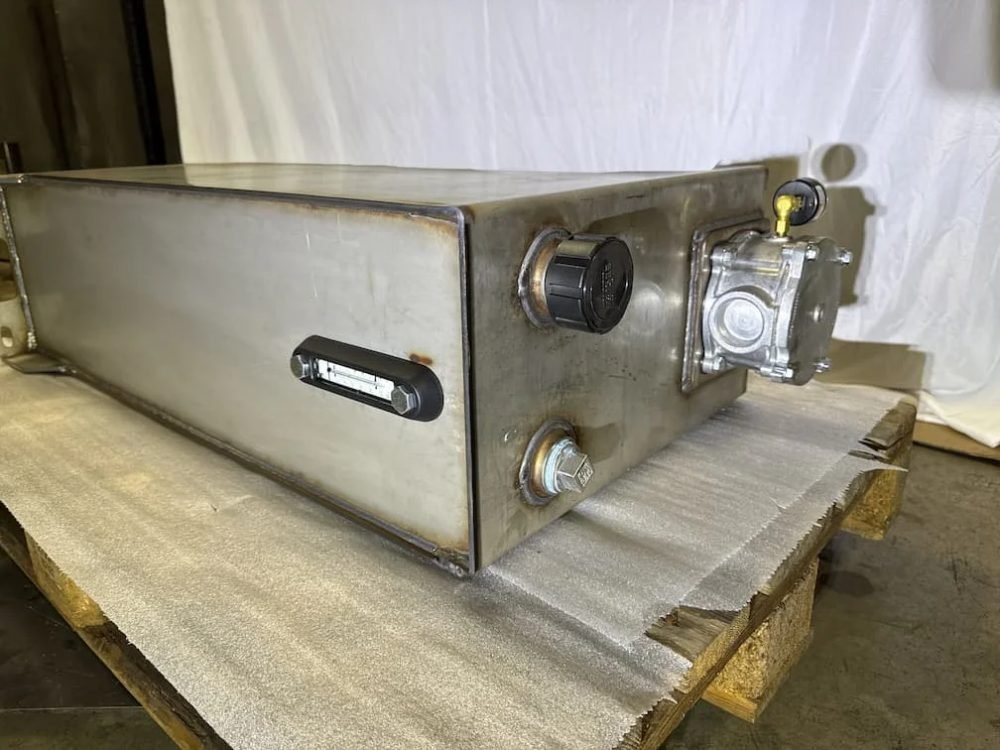
Stainless Reservoir with Integrated Pump Mount
Fabricated in stainless for a washdown-environment application, with pump mount and pressure gauge built in.
Industrial / HPU
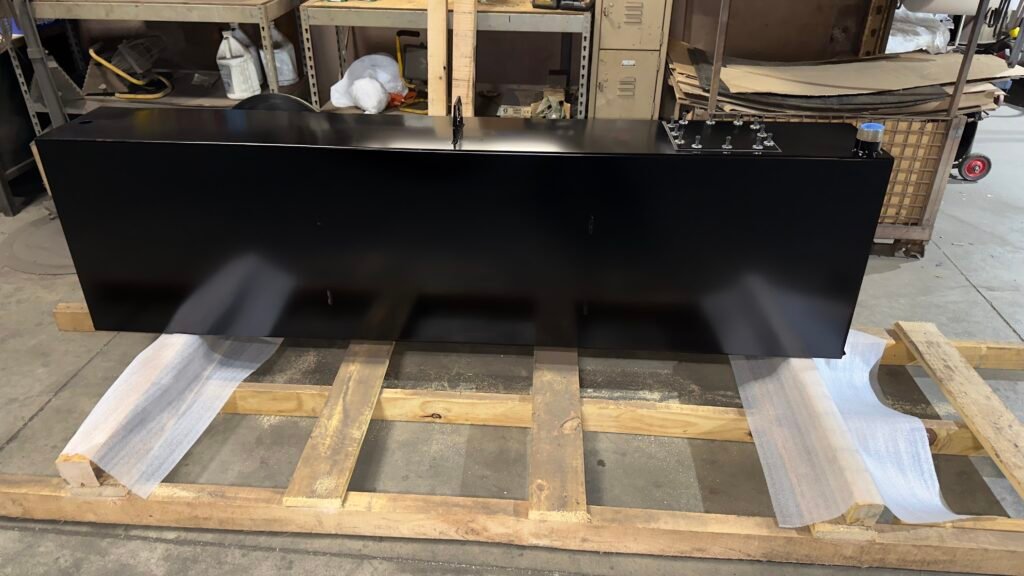
Multi-Port Reservoir, Machined Top Plate
A production reservoir built around a hydraulic power unit package, with return, suction, and gauge ports positioned to spec.
Industries We Serve
See more on our Industries Served page.
Frequently Asked Questions
What does a hydraulic reservoir tank do?
It stores hydraulic fluid and conditions it before it returns to the pump — dissipating heat, releasing entrained air, letting contaminants settle, and supplying clean fluid to the pump suction line.
How does a hydraulic reservoir tank work?
Fluid returns through the return port, crosses internal baffles that slow and separate it from the suction side, radiates heat into the tank walls, releases air through the breather, and lets contaminants settle before clean fluid is drawn back to the pump.
How do I size a hydraulic reservoir?
Start with 3 to 5 times your pump’s flow rate in GPM, plus about a 10% air cushion, then adjust for duty cycle, heat load, and available cooling.
What is the rule of thumb for hydraulic tank sizing?
Reservoir volume in gallons is generally 3 to 5 times pump flow in GPM for standard hydraulic oil in an open circuit — a starting point, not a final answer.
What material is best for a hydraulic reservoir tank?
Carbon steel for most industrial and OEM applications, stainless steel for food-grade, marine, or chemical environments, and aluminum where weight is a priority.
Should I choose carbon steel, stainless steel, or aluminum?
It depends on your environment and weight requirements — carbon steel for general use, stainless for corrosive or washdown conditions, aluminum for mobile or weight-sensitive equipment.
Do I need internal baffles in my hydraulic tank?
Yes, in nearly every application. Baffles separate return and suction flow, aid air release, and help contaminants settle out.
What is the purpose of baffles in a hydraulic reservoir?
They calm turbulent return flow, prevent hot fluid from short-circuiting to the suction port, help air escape, and add structural rigidity.
Can you build a hydraulic reservoir tank from my CAD drawing?
Yes — we build directly from STEP, DXF, SolidWorks, or PDF files.
What file formats do you accept for custom tank quotes?
STEP, DXF, SolidWorks, and PDF. A physical sample or dimensioned sketch also works if you don’t have a formal CAD file.
What ports should I include?
At minimum a suction port, return port, drain, and filler breather. Many tanks also add a sight gauge, clean-out cover, magnetic drain, and temperature gauge port.
Do you pressure test every tank?
Yes. Every tank is leak tested and inspected before it ships, with documented results available on request.
Can you manufacture prototypes?
Yes, from single prototype units through full production runs, using the same process each time.
Do you powder coat the tanks?
Yes, powder coating is done in-house and available alongside wet paint for complex geometries or specific color matching.
What’s the difference between powder coating and paint for hydraulic tanks?
Powder coating cures to a thicker, more chip- and corrosion-resistant finish. Wet paint offers more flexibility for color matching and complex shapes.
What industries use hydraulic reservoirs?
Agriculture, construction, industrial manufacturing, hydraulic power units, forestry, truck equipment, waste equipment, mining, material handling, and OEM equipment.
What’s the difference between a vertical and horizontal reservoir?
Vertical tanks have a smaller footprint for tight floor space; horizontal tanks offer more fluid surface area for heat dissipation and air separation, and suit mobile equipment with height restrictions.
Can a hydraulic tank be too big?
Yes — oversizing adds unnecessary weight, cost, and footprint without improving performance. Size to actual heat load and duty cycle.
What is a sight gauge used for?
It lets you visually check fluid level (and, on combination units, temperature) without opening the tank.
How long does it take to get a custom hydraulic reservoir tank?
Domestic fabricators with stable capacity typically run 3 to 6 week lead times, though this varies with complexity and volume. Contact us with your drawing for a specific timeline.
Do you ship nationwide?
Yes — we ship from Anamosa, Iowa to OEM customers across the United States, for prototype and production orders alike.
What’s the difference between a hydraulic reservoir tank and a hydraulic power unit?
The reservoir is the fluid storage and conditioning component. A hydraulic power unit is the full assembly — pump, motor, valves, controls — built around it.
Should I spec a heavier gauge tank for longer service life?
Often yes. Many OEMs now spec 3/16″ or 1/4″ plate over lighter gauges to hold up better under vibration and extend service life.
Do you provide quality documentation with each tank?
Yes — documented leak-test results and weld inspection records are available with each order, as many OEM quality programs now require.
Why Choose Engineered Welding?
We’ve been manufacturing in Anamosa, Iowa since 2002, and we’ve built and shipped over 80,000 hydraulic reservoirs with zero defects — a track record that comes from controlling the entire process in-house rather than outsourcing steps to third parties.
Every tank starts as your CAD file or drawing, not a modified stock design. From there it moves through HD plasma cutting and CNC press brake forming on our own equipment, robotic and manual welding from AWS D1.1-trained welders, 100% leak testing, and in-house powder coating — all under one roof, whether you need one prototype or an ongoing production run shipped nationwide.
See our full capabilities on Fabrication Services, browse example builds in our project gallery, or read more about our shop on the About Us page.
Need a Custom Hydraulic Reservoir Tank?
Engineered Welding manufactures custom hydraulic reservoir tanks for OEM equipment builders across the United States. Whether you need a single prototype or ongoing production, our team can build to your exact specifications.